

 Hannah Brooks
The Calm Cook’s Guide to Ounces and Gallons
A long read, about 25 minutes
The Pour That Started Every Conversion Question
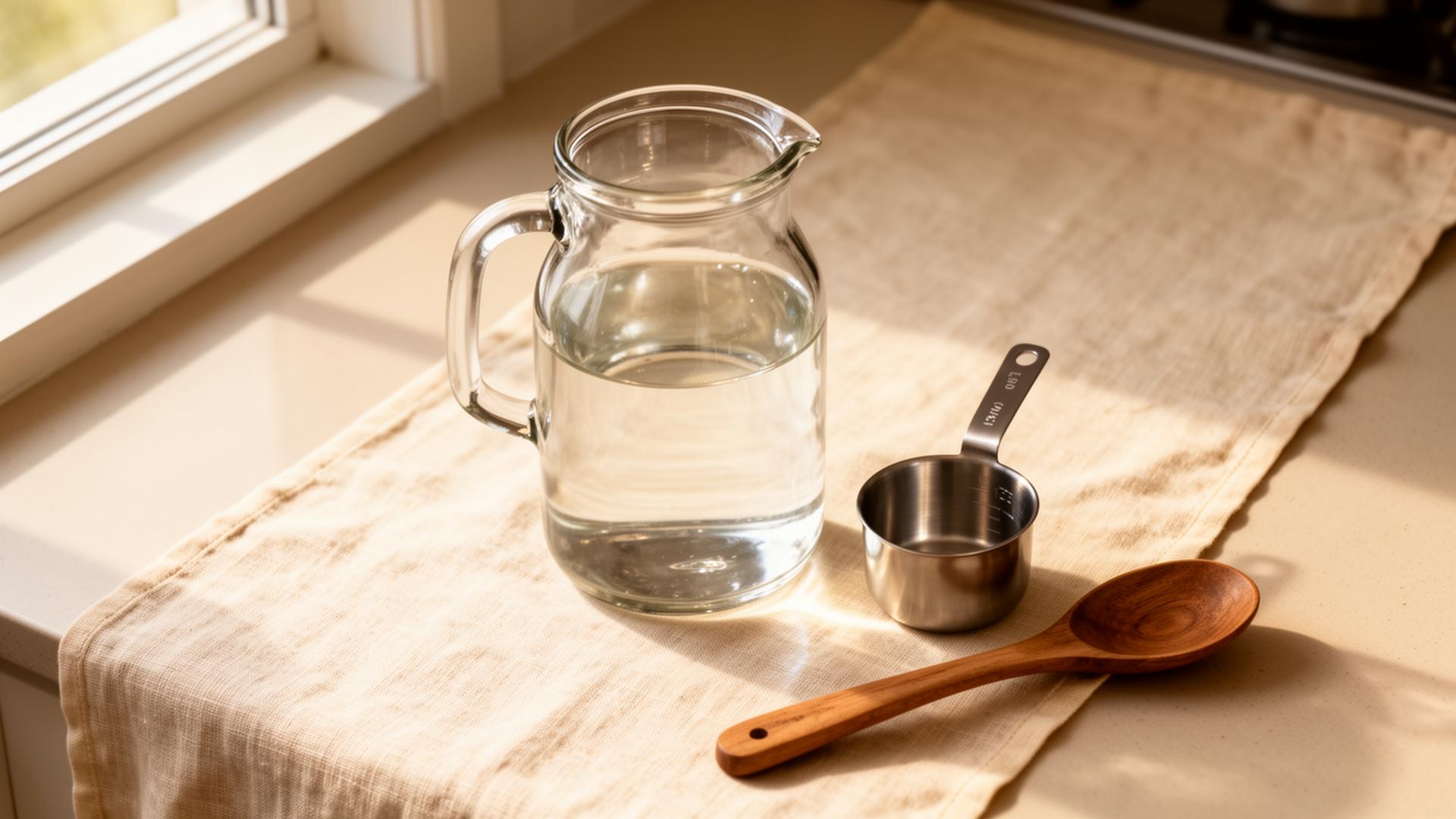
You are halfway through filling a stock pot with water for pasta. The recipe says four quarts. Your largest measuring pitcher tops out at thirty two ounces. Somewhere a small voice in the back of your head asks how many ounces are in a gallon, and a slightly louder voice answers that you should already know this by now. That little moment of friction in the kitchen is the same friction someone feels at the gas pump in London trying to read an American sticker, the same friction a brewer feels reading a recipe written in a different country, and the same friction a swimming pool owner feels squinting at a bottle of chemical that lists doses per gallon. None of these people are bad at math. They are just standing in front of two units that look familiar and quietly behave differently depending on which side of the Atlantic invented them.
This guide is the long, calm walk through ounces and gallons that those moments deserve. We will start with the one rule that solves most everyday questions, then slowly widen out to the cases the rule does not cover. Weight versus volume. American gallons versus British gallons. Cooking ingredients that pretend to weigh the same and absolutely do not. Fuel, pools, cleaning chemicals, and the small but real risk of measuring something the wrong way. By the time we are done, the calculator at the top of this page will feel less like a crutch and more like a friendly second opinion.
The promise of this article is simple. You will leave with a gut feel for what a gallon actually is, a few mental shortcuts that survive a busy kitchen or a noisy garage, and enough background to spot when a number on a label is going to bite you. No equations you cannot follow. No fancy talk. Just the kind of plain explanation a careful friend would give you over coffee.
The One Rule That Solves Most of It
The single most useful number on this whole page is one hundred twenty eight. One US gallon contains one hundred twenty eight US fluid ounces. That is the rule that runs ninety percent of everyday American kitchens, garages, and grocery aisles. Half a gallon is sixty four fluid ounces. A quart is thirty two. A pint is sixteen. A cup is eight. Each step halves the one above it, and that ladder is so consistent that once you learn it, your brain will reach for it without asking permission.
If you can hold one hundred twenty eight in your head, you can answer almost any everyday liquid question without a calculator. A gallon of milk is one hundred twenty eight ounces. A two liter bottle of soda is about sixty seven and a half fluid ounces, which is a hair more than half a US gallon. A small bottled water is usually sixteen point nine fluid ounces, which is half a liter, and four of those gets you within a few sips of a gallon. Even your dog has a quietly useful number tied to this ladder. A medium dog drinks roughly half a gallon of water a day, which means a sixty four ounce bowl is a sensible refill point. None of this needs the calculator. It just needs the ladder.
The British ladder uses the same words but a different bottom number. One UK gallon contains one hundred sixty UK fluid ounces. The same halving rule still works. Half a UK gallon is eighty UK fluid ounces, a UK quart is forty UK fluid ounces, and a UK pint is twenty UK fluid ounces. That is why British pints in the pub feel a touch more generous than the pints visiting Americans expect. The ladder has not changed shape. The bottom rung is just sitting on a slightly taller floor.
There is one more honest detail worth knowing before we move on. The American gallon and the British gallon are different sizes by volume, and the American fluid ounce and the British fluid ounce are also different sizes. So one hundred twenty eight US fluid ounces and one hundred sixty UK fluid ounces both correctly equal one gallon, in their own systems. They are not the same volume of water. We will come back to this in detail later, but for now, hold on to the friendly fact that the math inside each system is clean and consistent. The mess only shows up when you cross between them.
Weight Ounces, Fluid Ounces, and the Trap Between Them
Here is the moment where most people get quietly tripped up. The word ounce can mean two completely different things. A fluid ounce is a measurement of volume, the size of a space something fills. A weight ounce is a measurement of mass, the heaviness of a thing on a scale. The two are only equal for water, and even then only at standard room temperature. For everything else they drift apart, sometimes by a little, sometimes by a lot.
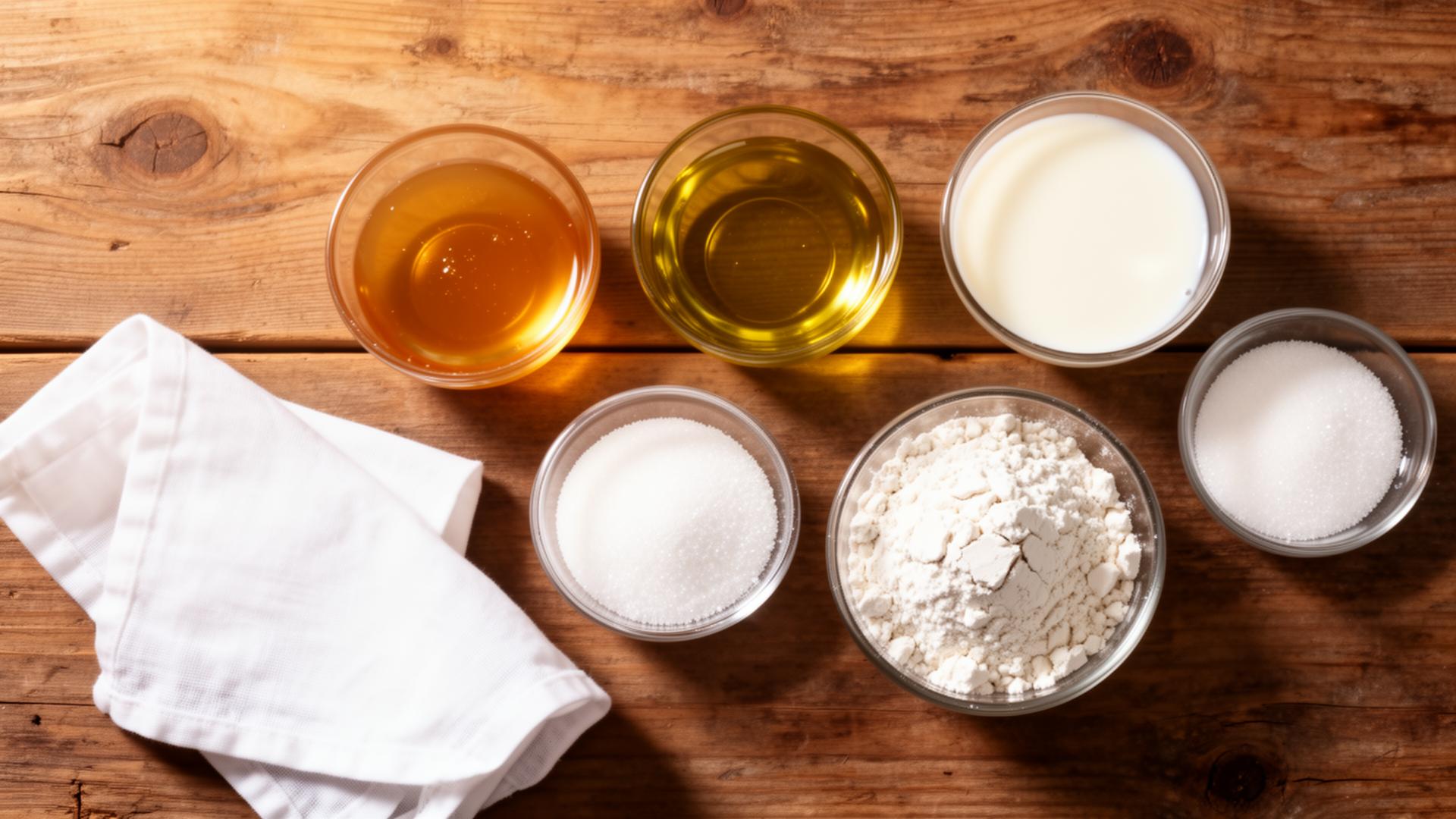
Picture two identical glass jars side by side. Fill the first jar with eight fluid ounces of water. Fill the second with eight fluid ounces of olive oil. Both jars hold the same amount of liquid by volume. Now put each jar on a kitchen scale. The water clocks in at very nearly eight weight ounces. The olive oil weighs a little under seven and a half. Same volume, different weight. That is density at work, and it is the reason a recipe that lists ingredients by weight is a more honest recipe than one that lists them by cup or by fluid ounce.
This matters every time you see ounces on a label. A bottle of shampoo that says twelve fluid ounces is telling you how much space the shampoo fills. A bag of flour that says five pounds is telling you how heavy it is. If the label says ounces with no other word attached, look for context. If the product is liquid and sold in a bottle or jug, the ounces almost certainly mean fluid ounces. If the product is solid and sold in a bag or box, the ounces almost certainly mean weight ounces. The exceptions are rare enough that this rule of thumb will not betray you very often.
When this matters most is in cooking. American recipes love to mix the two. A typical brownie recipe might call for eight ounces of chocolate and a cup of milk in the same paragraph. The chocolate is weighed. The milk is measured by volume. Both are written in ounces in everyday speech. A baker who reaches for a measuring cup to portion out the chocolate is going to end up with the wrong amount, because chocolate is denser than water and a measured cup of chopped chocolate weighs noticeably more than eight ounces by mass. The calculator above gives you a fluid ounces mode and a weight ounces mode for exactly this reason. Picking the right one before you start typing is half the battle.
Why Density Quietly Runs the Show
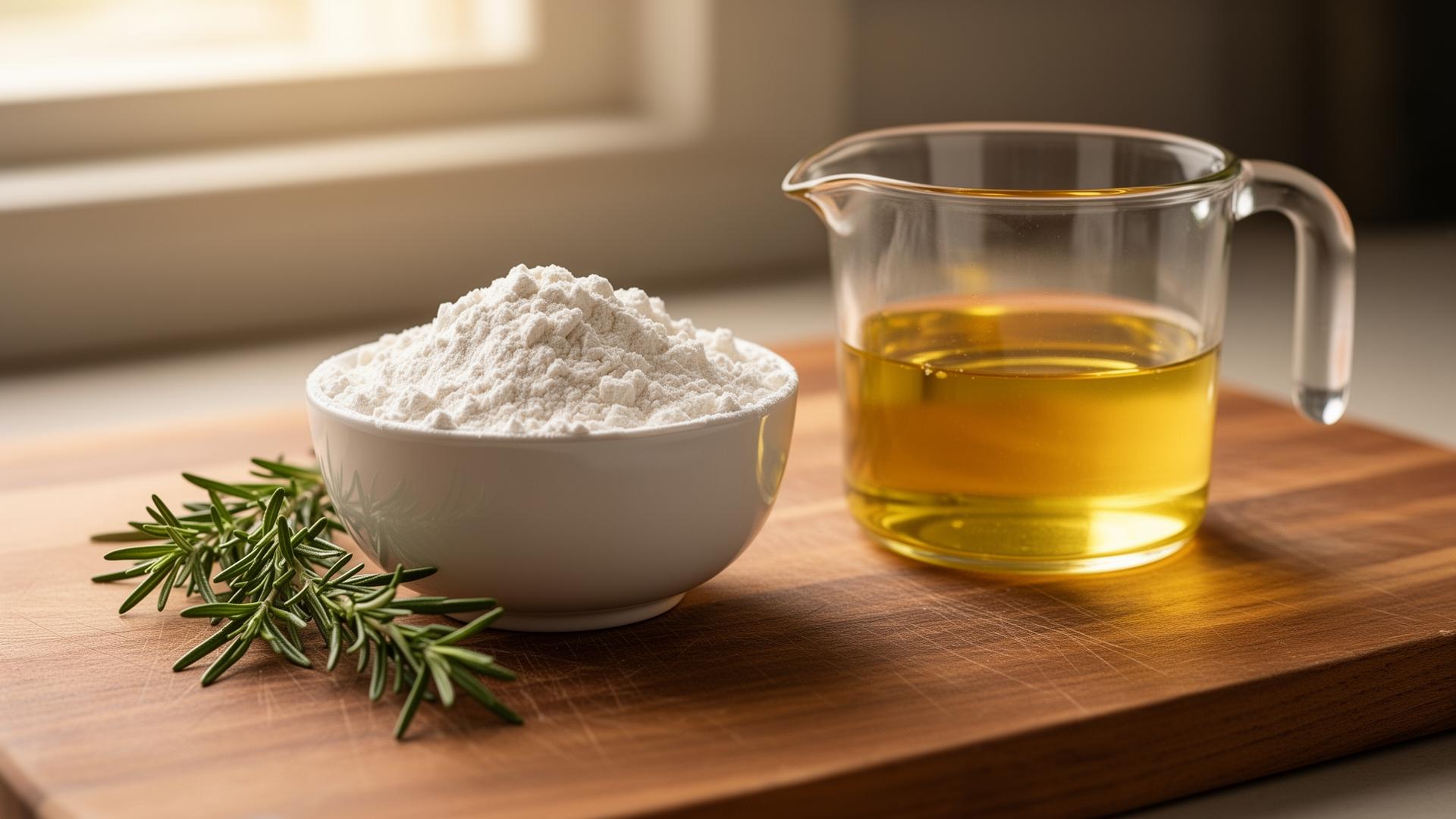
Density is just a word for how tightly packed a substance is. Water sets the baseline because, by happy historical accident, one gram of water at room temperature fills almost exactly one milliliter of space. That gives water a density of one. Almost everything else gets compared against that. Olive oil is around zero point nine one, which is why it floats on water in a salad dressing. Honey is closer to one point four, which is why a tablespoon of honey is heavier than a tablespoon of milk. Granulated sugar is about zero point eight five, and all purpose flour is closer to zero point five three when it is loose and not packed.
That last number surprises people. Flour feels heavy when you lift the bag, but it is mostly air once it is poured into a cup. A US gallon of all purpose flour weighs only about seventy weight ounces, while a US gallon of water weighs about one hundred thirty three. Same gallon, almost double the weight, just because the substance inside is denser. If a recipe asks for three weight ounces of flour, you are looking at a little more than half a cup. Three fluid ounces of flour, on the other hand, is a tiny puff of powder that disappears in a sandwich bag. Same number, very different actual amount.
This is where the calculator earns its keep. If you select weight ounces and pick an ingredient, the math behind the scenes does the density step for you, then converts to gallons. You do not need to remember that flour is zero point five three or that honey is one point four two. You just pick the ingredient. The same trick works in reverse for gallons to weight ounces. Choose a gallon of milk, ask for the weight, and the calculator multiplies by a density of one point zero three and hands you a number that matches what your kitchen scale would show.
If your ingredient is not on the list, the world has a backup. A quick search for the density of any common substance will give you a number in grams per milliliter. Type that into the custom density field and the calculator will use it directly. Maple syrup is about one point three two. Brown sugar packed firmly is closer to zero point nine three. Powdered sugar is around zero point five six. Rolled oats sit closer to zero point three six because they are mostly air. Each of these has a real, measurable density, and the math does not care which one you pick. It just needs the number.
The American Gallon and the British Gallon Are Not Twins
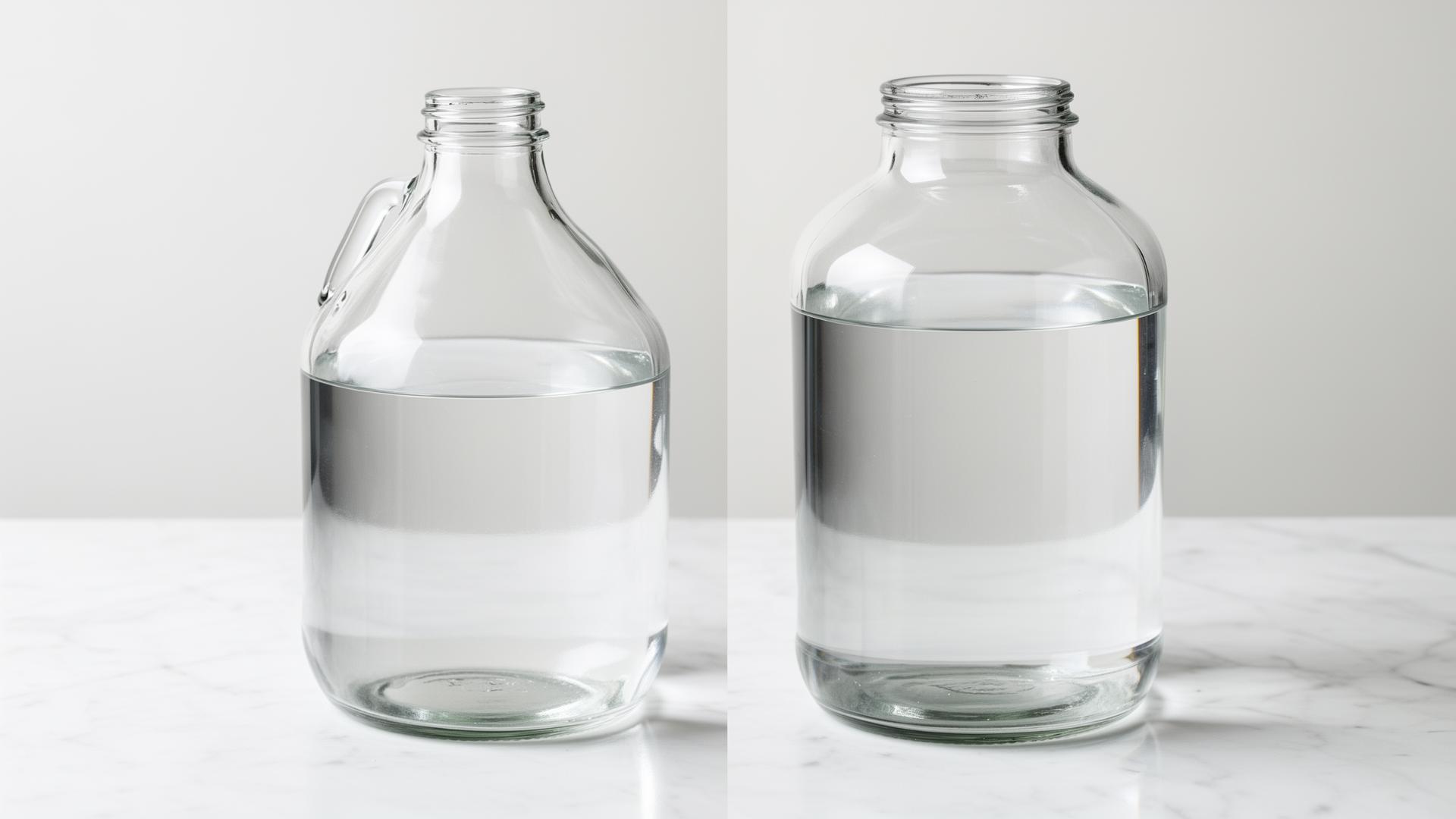
Now we have to talk honestly about the moment two countries borrowed the same word and walked off in different directions. The US gallon is roughly three thousand seven hundred eighty five milliliters. The UK imperial gallon is roughly four thousand five hundred forty six milliliters. That is a difference of about twenty percent, which is large enough to ruin a recipe, throw off a fuel calculation, and quietly turn a strong cocktail into a weak one.
The same word problem haunts fluid ounces. A US fluid ounce is about twenty nine point five seven milliliters. A UK fluid ounce is about twenty eight point four one milliliters. The UK ounce is the slightly smaller of the two, by a couple of percent. That is why a British recipe that asks for ten fluid ounces of cream and an American recipe that asks for ten fluid ounces of cream are not quite the same pour. The British amount is a touch less.
The good news is that the calculator at the top of this page lets you flip between US and UK on both sides. So you can take a number from a Victorian baking book that lists everything in imperial fluid ounces, switch to UK gallons or even straight to US fluid ounces, and get a number that lines up with the measuring cups you actually own. The most common cross border task in modern life is converting fuel economy. American cars are sold by the mile per US gallon. British cars are sold by the mile per UK gallon. A car rated at thirty miles per US gallon is closer to thirty six miles per UK gallon, because the UK gallon is bigger. The car has not gotten more efficient. The unit just measured more fuel.
A useful mental shortcut to keep in your back pocket is that one UK gallon is about one point two US gallons, and one US gallon is about zero point eight three UK gallons. If you ever see a British price per gallon at a fuel station and want to feel it in American terms, divide by one point two. The math is rough but close enough to keep you honest while you are walking past the pump.
A Calm History of How a Gallon Got Its Number
None of this confusion was anyone's plan. The gallon as a unit drifted through centuries of European trade, where merchants needed a measure for wine, ale, and grain. There were once at least three competing English gallons, each used for a different commodity. The wine gallon was smaller, the ale gallon was a little larger, and the corn gallon was larger still. When the British Empire formalized the imperial system in eighteen twenty four, it picked one definition and asked the world to follow along. The empire chose a gallon based on the volume of ten pounds of water at a specific temperature, which is where the modern UK gallon of about four thousand five hundred forty six milliliters comes from.
The United States, by then independent for a few decades, kept the older wine gallon as its standard, which is why the modern US gallon of about three thousand seven hundred eighty five milliliters is the smaller of the two. There was no grand argument about it. The two countries simply froze different historical conventions and moved on. By the time anyone proposed harmonizing them, both had built generations of cookbooks, fuel infrastructure, road signs, and household measuring cups around their chosen number. Changing now would cost more than living with the difference.
The fluid ounce got dragged along for the ride. Each gallon was divided into one hundred twenty eight or one hundred sixty fluid ounces depending on which gallon you started with, and that gave each country its own slightly different ounce. None of this is a flaw in the system. It is the polite scar tissue of two countries sharing a language but not a kitchen. The point of telling you all this is not to make you feel small for being confused. It is to show that the confusion has roots, and that the calculator above is doing the gentle bridging work that the empires forgot to do for us.
Water Is the Easy Case, So Start There
Start with water if you want to build trust in your own intuition. Water is the easiest case in the entire ounces to gallons world because its weight and its volume agree almost perfectly. One US fluid ounce of water weighs almost exactly one weight ounce. One US gallon of water weighs about eight and a third pounds, or close to one hundred thirty three weight ounces. That last number is worth memorizing if you carry water for camping, hauling, or filling a fish tank. A full five gallon jug is roughly forty two pounds, which is heavier than most people guess and a useful thing to know before lifting one with one hand.
Hydration math sits comfortably in this same space. A common guideline suggests adults drink about half a gallon of water a day, which is sixty four fluid ounces. That breaks down to four sixteen ounce bottles, or eight eight ounce glasses. The numbers are not a strict prescription. Activity, climate, and individual health all push the target up or down. But the gallon ladder makes the rough plan easy to picture. If your reusable bottle holds thirty two fluid ounces, two refills land you at the half gallon mark. If it holds forty ounces, you only need a refill and a top off. The ladder turns a vague target into a concrete plan.
Cooking with water uses the same trust. A recipe that calls for one quart of stock is asking for thirty two fluid ounces. A recipe that wants a half gallon of brine is asking for sixty four. A recipe that demands a gallon of dough proofing water is one hundred twenty eight. Pour confidently. Water rewards a steady hand because nothing about it is going to surprise you on a scale. If your scale shows seven weight ounces of water and the recipe asks for seven fluid ounces, you are inside a fraction of a percent of the truth. That is close enough that you can move on with your day.
Cooking, Baking, and the Honest Math of Recipes
Cooking is where the honest gallon math meets a thousand small decisions. Most home recipes never reach a full gallon, but they live inside a world where pints, quarts, and half gallons trade places constantly. A pot of soup might use a quart and a half of broth. A pitcher of iced tea might want two quarts of water plus a cup of sugar. A batch of stock made from a leftover roast can easily fill a full gallon container by the time you strain it. Knowing where you are on the ladder makes shopping, prepping, and storing all of these much easier.
Recipes written by careful bakers are increasingly given by weight rather than by volume. A king cake recipe might list five hundred grams of bread flour, and a serious bread book will give you the entire dough in grams. Those numbers are not snobbery. They are the most honest way to make sure your loaf comes out the same every time. American kitchens that lean on cups still get good results, but the trade off is a touch more variability. A scoop of flour from a freshly opened bag is lighter than a scoop from a settled bag. A cup of brown sugar packed by an enthusiastic baker can be a third heavier than a cup spooned in lightly. The calculator above will quietly handle the gallon side of these conversions, but the underlying lesson is the same. When precision matters, weigh.
There are two ingredients in the average kitchen worth a special note. Honey and maple syrup. Both are dense, sticky, and slow to pour. A cup of honey weighs about twelve weight ounces, far more than a cup of water. If a recipe lists eight weight ounces of honey, do not pour eight fluid ounces. You will end up with too much. Use a scale, or pick honey from the calculator and convert from weight ounces to a volume you can pour into a measuring cup. Maple syrup behaves similarly. The trick is to remember that anything sweet, sticky, and heavier than water is going to lie to you if you treat its ounces as fluid ounces.
The other quiet villain is fat. Solid fats like butter and shortening are usually sold by weight, but recipes often ask for them by volume. A stick of butter is conveniently four weight ounces, which is half a cup, which is also four fluid ounces if you melt it. That neat coincidence holds because butter is roughly nine tenths the density of water and the standard stick was sized to match the math. Cream cheese, however, was not. An eight ounce block of cream cheese is eight weight ounces, not eight fluid ounces. Treat it as the heavier number.
Fuel, Fish Tanks, and Other Big Containers
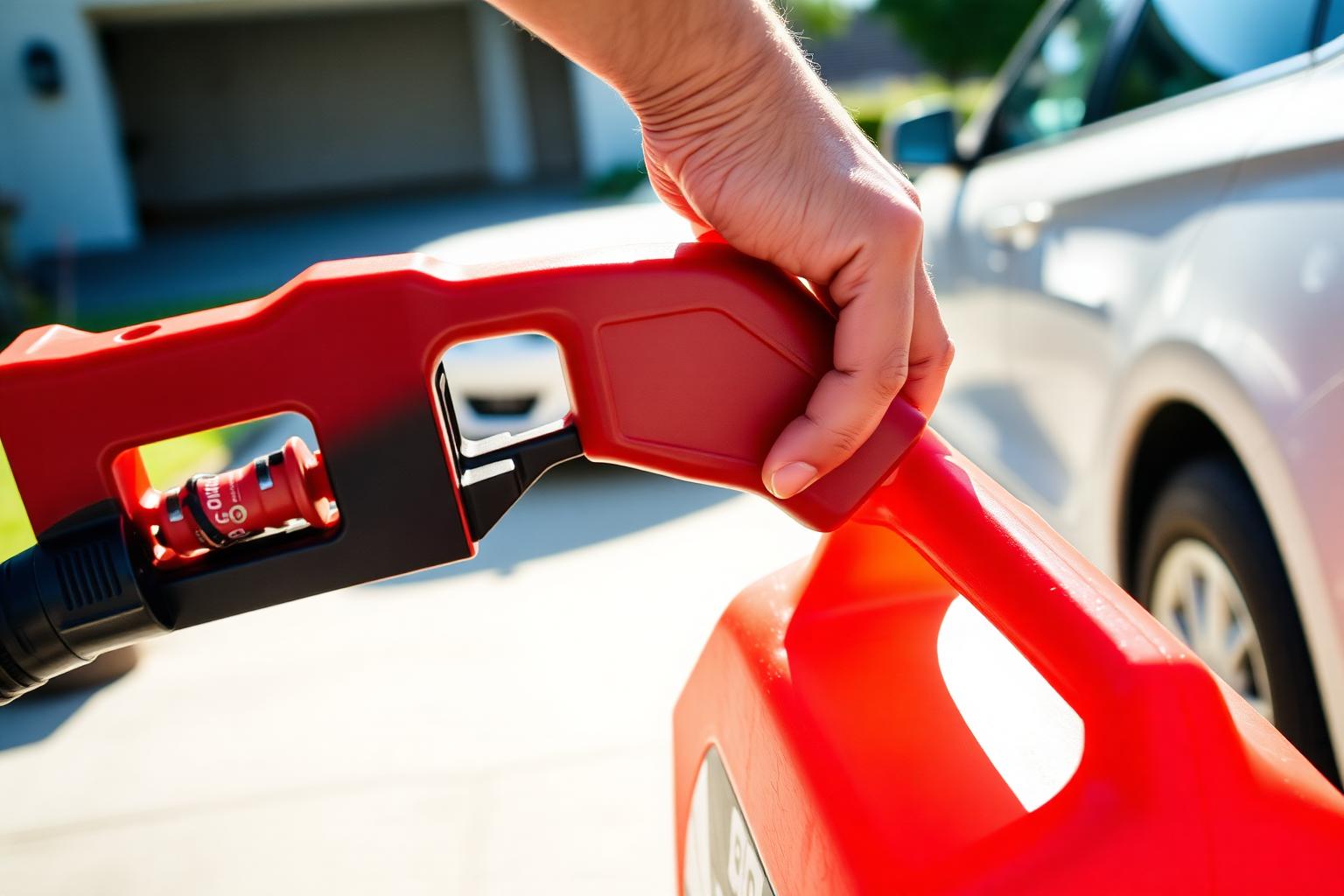
Step out of the kitchen and into the garage. Gallons run the world of fuel, lawn equipment, paint, and big plastic jugs of windshield washer fluid. The American gas can on the floor is almost always a one, two, or five US gallon container. The five gallon size is the workhorse of construction sites and emergency kits because it carries about thirty pounds of fuel without becoming awkward to lift. If you ever need to convert a fluid ounce reading on a small bottle to gallons, the same one hundred twenty eight rule does the work. A thirty two ounce bottle of two stroke oil is one quarter of a gallon. A sixty four ounce bottle is half a gallon. A jug labeled one hundred twenty eight ounces is a gallon dressed in a different label.
Two stroke engine math is one place where ounces and gallons have to meet without arguing. A typical fifty to one mix calls for two point six US fluid ounces of oil per US gallon of gasoline. A forty to one mix bumps that to about three point two ounces per gallon. These ratios are printed on every bottle of two stroke oil and almost never on a US to UK conversion table, so be careful if you are mixing fuel in a country whose gallon is not the gallon the bottle assumed. A sloppy ratio in a small engine can foul the spark plug at best and seize the engine at worst. The calculator handles the conversion if you are running British equipment with American oil, or the other way around.
Lawn and pool people meet gallons in another way. A standard residential pool is rated in gallons, often in the tens of thousands. A backyard inflatable might hold a few hundred gallons. A koi pond is somewhere in the middle. Most chemical doses are written as so many fluid ounces per so many thousand gallons of water. That sounds intimidating, but the math is gentle. Sixteen fluid ounces is a pint. A pint per ten thousand gallons of pool water is a real life example of a chlorine shock dose. Once you know the gallon size of your pool, the rest is multiplication you can do in your head while standing on the deck.
Pools, Cleaning, and Anything That Mixes With Water
Cleaning chemicals are the unsung corner of ounce to gallon math. Almost every concentrated cleaner on the planet ships with instructions that look like a riddle. Mix one ounce per gallon of water for light cleaning. Mix four ounces per gallon for heavy cleaning. The label is doing you the favor of avoiding metric on a US package, but it is also assuming you have a gallon bucket and a measuring cup that goes down to single ounces. If you are diluting in a quart spray bottle instead, the math has to scale.
A quart is a quarter of a gallon, so an instruction that says one ounce per gallon becomes a quarter ounce per quart. A quarter ounce is a hair under one and a half teaspoons. That tiny pour is the difference between a cleaner that works gently on a hardwood floor and one that strips the finish off it. Use too little, and the cleaner cannot do its job. Use too much, and you damage the surface or leave a residue that picks up dirt faster than the bare surface would. The calculator can save you from that math entirely. Tell it the ounces, tell it the gallons, ask it what fits in your bottle, and pour what it gives you.
The same logic applies to plant fertilizer, lawn weed killer, and floor finish. Each of these has a recommended dose in fluid ounces per gallon. Once you have the gallon size of your tank, sprayer, or watering can, the math collapses. The single biggest mistake homeowners make in this category is mixing for a five gallon sprayer using the dose that fits a one gallon hand spray. The bottle of concentrate looks empty very quickly when you do that, and the lawn pays the price.
Pools live in this same world. A common stabilizer dose is around four ounces per ten thousand gallons. A common chlorine shock dose is one pound per ten thousand gallons. A common algaecide dose is six ounces per ten thousand gallons. The calculator is happy to do the cross unit work, but the deeper habit is to know your pool's gallon count by memory. It is one of those numbers that pays back the small effort of looking it up once and writing it on the inside of the equipment shed door.
Scaling Recipes Up and Down Without Losing Your Footing
Scaling a recipe up or down is where ounces and gallons quietly become a stress test. Doubling a soup is easy when the original calls for two cups of stock. Doubling a soup that calls for a quart and a half of stock is a moment where you have to picture three quarts in your head, decide whether your stock pot is large enough, and then either reach for a pitcher you trust or split the cooking into two pots.
The cleanest scaling shortcut is to think in halves and quarters. Halving a gallon is sixty four fluid ounces. Quartering a gallon is thirty two. Eighth of a gallon is sixteen, which is a pint. Sixteenth of a gallon is eight, which is a cup. That ladder is symmetrical, which means doubling and halving stay tidy. If a recipe wants two cups of milk and you are doubling it, you need a quart. If it wants a quart and you are doubling that, you need a half gallon. If it wants a half gallon and you are doubling that, you need a full gallon, which is also the moment to ask whether you really need this much soup.
Going down in size is the same ladder run in reverse. If a recipe wants three quarts of broth and you are halving it, you need a quart and a pint, or a quart and a half, or six cups, all of which are the same volume said three different ways. The calculator will give you any of those numbers in any unit you ask for. The point of the ladder is that you can do most of the work without it. The calculator is there for the moment when the original recipe gives you something awkward like one and three quarter quarts and asks you to multiply by two and a third because you are feeding a bigger crowd than usual.
A small bonus shortcut for the cooks who like a little extra precision. If you weigh your scaled recipe instead of measuring by volume, your math is suddenly free of every density question we have walked through. A recipe scaled by weight scales perfectly because grams of flour and grams of water and grams of butter all double or halve in clean lockstep. This is why serious bakers love their scales. They have stepped off the gallon ladder entirely and onto a different one that does not care about the difference between a heavy and a light scoop.
How to Read a Measuring Pitcher Without Squinting
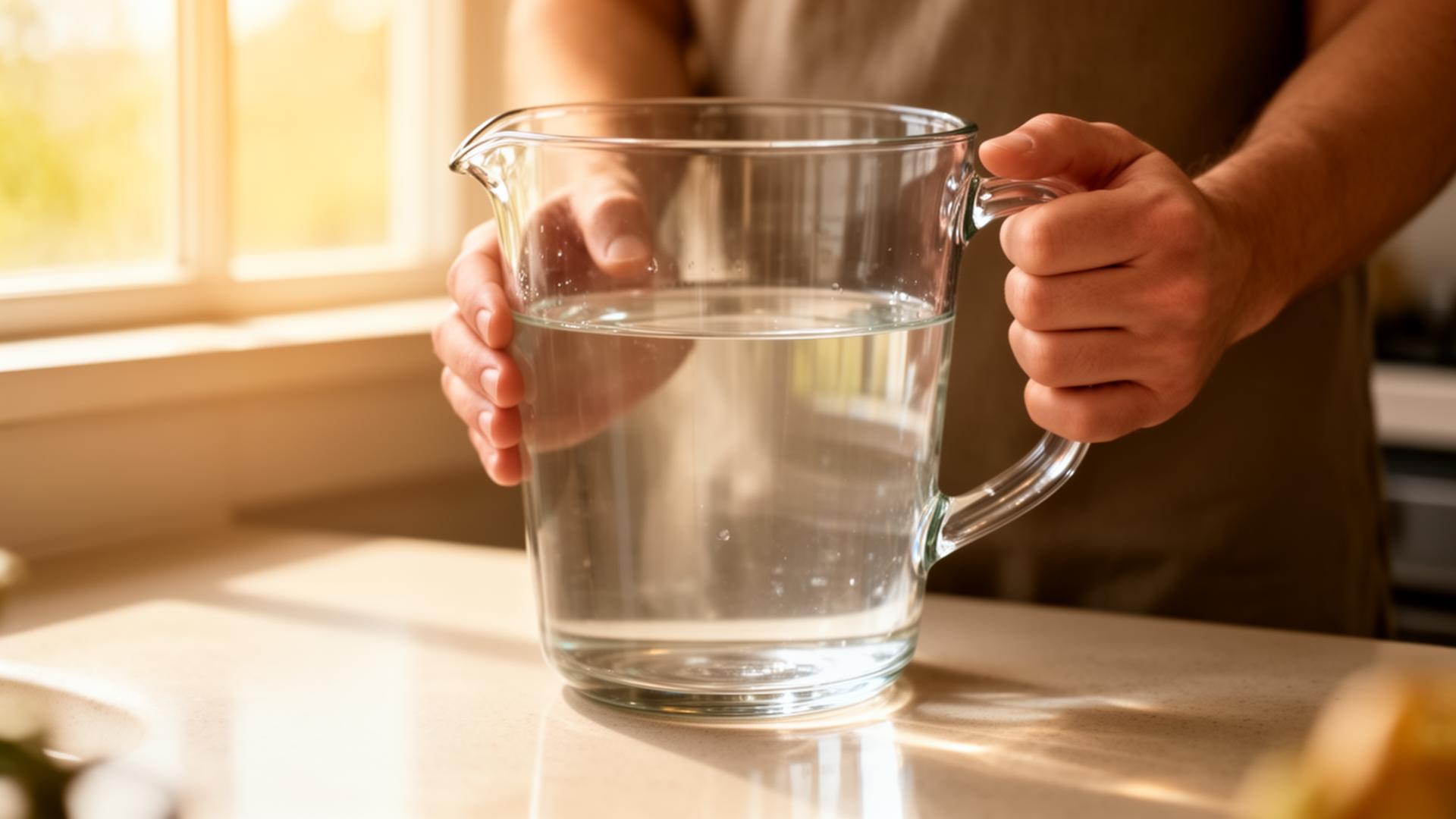
Reading a measuring pitcher accurately is a small craft worth practicing. Place the pitcher on a flat counter. Bend at the knees so your eye is level with the markings on the side. Pour slowly. The water will form a slight curve at the top of its column, called a meniscus. The bottom of that curve is the line you are reading. Reading the top of the curve, or reading from above the pitcher, will give you a number that is two or three percent off, which sounds small but adds up across a recipe.
Plastic pitchers usually have markings molded directly into the wall. They feel reliable but they have a quiet weakness. Many of them double up units on the same line, with ounces on one side and milliliters on the other, and a few of them include a quart marking that is not perfectly aligned with the ounce marking. If you are using a new pitcher for the first time, fill it once with a known quantity of water from a trusted measure, and check that the markings agree. Once you have done this, you will trust that pitcher for years.
Glass pitchers tend to have painted markings that are sharper than molded ones, which makes reading them easier. The trade off is that painted lines wear off after years of dishwasher use. If your old pitcher's quart line has faded, the calculator can help you set up a new visual landmark. Fill it with thirty two fluid ounces of water from a known measure, mark the level with a piece of tape, and you have a fresh quart line that lasts as long as the tape does.
The most useful single pitcher size for a home cook is the four cup, two pint, one quart pitcher with markings down to a quarter cup. That single tool covers nearly every measurement task in a normal week. If you want to step up, a four quart, one gallon pitcher is the next size up, and it earns its space if you make stock, brine large cuts of meat, or brew coffee for a crowd.
The Five Mistakes That Trip Up Almost Everyone
Five mistakes catch almost everyone at some point in this conversion world. Knowing them in advance is the cheapest way to avoid them.
The first mistake is treating weight ounces and fluid ounces as the same thing. We have already walked through why they are different, but the trap is so easy to fall into that even careful cooks slip every few months. The fix is a one second pause before you pour or weigh. Ask yourself which kind of ounce the recipe meant. The answer is almost always obvious from context, and that one second pause has saved countless cakes.
The second mistake is using a US measure for a UK recipe or the other way around. A British scone recipe that wants ten fluid ounces of cream is asking for ten UK fluid ounces, which is about nine and a half US fluid ounces. A small difference in cream is not catastrophic, but a small difference in baking powder, gelatin, or yeast can be. If you find yourself making a recipe from a country whose cookbook is on your shelf for the first time, run the key liquid measurements through the calculator before you start.
The third mistake is reading a measuring pitcher from above instead of from the side. The angle adds two or three percent of error every time. Bend down. Read the meniscus. Move on.
The fourth mistake is trusting that all gallon containers actually hold a gallon. Many household jugs that look like a gallon are actually a hair smaller for shipping reasons. Milk jugs in some markets contain a hundred twenty four or a hundred twenty six fluid ounces rather than the full hundred twenty eight, especially under recent shrinkflation. If a recipe calls for a gallon of milk and your jug is short by an ounce or two, the recipe will still work fine, but if you are doing a chemical dilution where the dose is small, that missing ounce can matter. Read the actual fluid ounce count on the label, not the round word on the front.
The fifth mistake is assuming that one cup of a scooped ingredient weighs the same as one cup of the same ingredient sifted. Sifted flour is fluffy and lighter. Scooped and packed flour is denser. The same is true for cocoa powder, powdered sugar, and brown sugar. If a recipe says sifted, sift first and then measure. If it says packed, press the ingredient firmly into the cup. The cup is the same volume in both cases. The weight is not.
Mental Shortcuts You Will Actually Remember
A short list of mental shortcuts that survive the noise of a busy kitchen.
A US gallon is one hundred twenty eight US fluid ounces. Half is sixty four. Quarter is thirty two. Eighth is sixteen, which is a pint. Sixteenth is eight, which is a cup. That ladder alone solves more daily questions than any calculator.
A US gallon of water weighs about eight and a third pounds, or one hundred thirty three weight ounces. A five gallon jug is about forty two pounds. A two and a half gallon jug is about twenty one pounds. Each of these is a number worth memorizing if you ever carry water more than a few steps.
A UK gallon is twenty percent larger than a US gallon. To turn US gallons into UK gallons, multiply by zero point eight three. To turn UK gallons into US gallons, multiply by one point two. Neither number is exact, but both are accurate enough for shopping math at a fuel pump.
Honey, maple syrup, and molasses weigh about a third more than water by the same volume. If a recipe calls for eight weight ounces of any of them, you need a little more than half a cup. If you measured by fluid ounces, you would end up with a third more sweetness than the recipe wanted, which is enough to throw off the structure of a baked good.
Flour, by contrast, weighs about half what water weighs by the same volume. A cup of all purpose flour is closer to four weight ounces than the eight weight ounces a cup of water would be. If a recipe says eight weight ounces of flour, you need closer to two cups by volume.
A teaspoon is about one sixth of a fluid ounce. A tablespoon is half a fluid ounce. A quarter cup is two fluid ounces. A third of a cup is two and two thirds fluid ounces. A half cup is four fluid ounces. A two thirds cup is five and one third fluid ounces. A three quarters cup is six fluid ounces. A full cup is eight fluid ounces. That tiny ladder lives between the gallon ladder and the spoon drawer, and learning it is the difference between a smooth cook and a frantic one.
Edge Cases the Calculator Quietly Handles for You
The calculator above takes care of a few quiet edge cases that almost no shortcut covers. The biggest is custom density. If you are converting a chemical, a beverage, a sauce, or anything else that is not on the built in list, you can type the density directly. That single feature is the difference between guessing and knowing.
Another edge case is mixed unit answers. If you ask the calculator how many gallons twelve hundred ounces of water is, it will tell you the answer in gallons, in liters, and in US quarts. Sometimes the helpful unit is not the one you typed. A recipe might be easier to picture in pints than in gallons, and a fish tank might be easier to picture in liters than in either. Glance at all the answers before you decide which one to write down.
The calculator also handles fractional and rounded inputs gracefully. If you pour what looks like one and three eighths cups, you can type one point three seven five and the math will not flinch. If you measured an awkward fifty seven fluid ounces of broth and want to know whether that is closer to half a gallon or three quarters of a gallon, the answer comes back without you needing to find common denominators in your head.
Finally, the calculator quietly catches one of the most common typing mistakes in unit math. If you ask for the result in gallons and the answer is so small it would be a fraction of a teaspoon, the display will switch into smaller units to show you something useful. If the answer would be larger than a swimming pool, it will not pretend a gallon answer is the friendly choice. The point of all this is that the tool is doing what a careful human friend would do. It is making sure the answer it hands you is the answer you actually need.
The Quiet Confidence of Knowing Your Gallons
The point of a long article like this is not to make you remember every density and every conversion factor. It is to give you the calm that comes from knowing the shape of the territory. Ounces and gallons sound complicated until you spend half an hour with them, and then they become the kind of thing you can lean on without thinking. The ladder of one hundred twenty eight, sixty four, thirty two, sixteen, eight runs through almost every American kitchen. The same ladder, with one hundred sixty at the top, runs through almost every British one. Density is the small twist that turns weight into volume and back. Custom density is the safety net for the substances density tables forgot. The calculator above is the friendly second opinion that catches the moments when your hands are floury, your eyes are tired, and the timer is beeping.
Trust the rule of one hundred twenty eight and you will be right almost every time. Reach for the calculator when the recipe gets weird, the unit gets foreign, or the dilution gets serious. The combination of a steady mental model and a careful tool is enough to handle every ounces to gallons question a normal life will throw at you. Pour with confidence. Read the meniscus from the side. Weigh when it matters. And when in doubt, type the number into the calculator at the top of this page and let it carry the last little bit of the load.