

 Hannah Brooks
How a pool salt calculator actually works (and what most online ones get wrong)

How a pool salt calculator actually works (and what most online ones get wrong)
The "Low Salt" light came on three weeks into my first summer with a saltwater pool. Two bags didn't fix it. So I added a third. The next morning the display read 4,800 PPM and the system was throwing a different error entirely. That's how I learned that pool salt math isn't optional.
A pool salt calculator handles a basic problem. Your pool has a known volume. You have a current salt reading. You have a target. You want to close the gap. The arithmetic is simple. Pool gallons times the PPM gap, divided by 120,000, equals pounds of salt to add.
Most online calculators do this fine. The trouble is the inputs. Pool volume guesses. Bad salt readings. Target numbers from a different chlorinator brand than yours. The calculator works. The setup around it is what people get wrong.
Getting the pool volume right
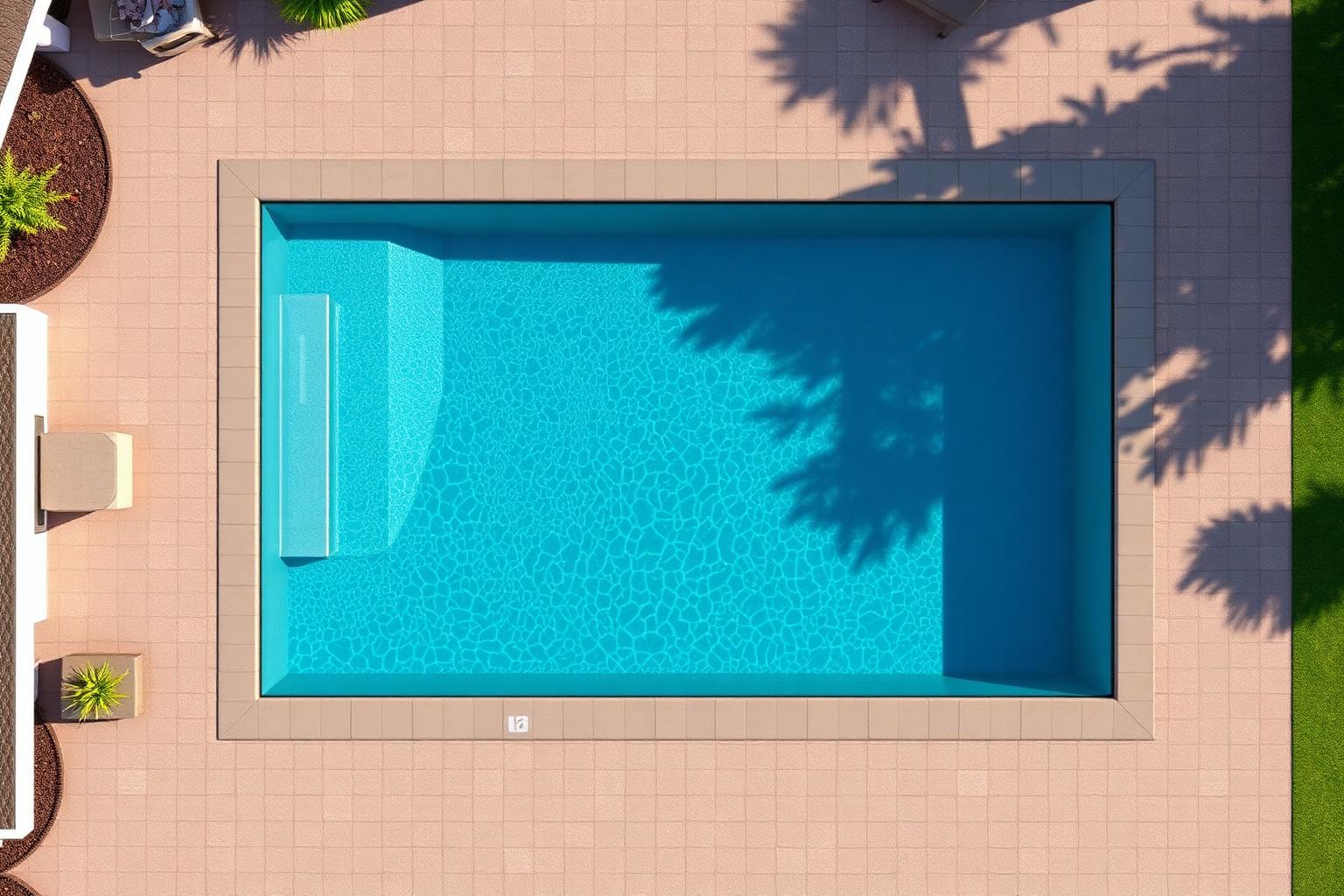
Volume is the input most people fudge. They guess. They round up. They use the number from when they first bought the pool and don't account for partial drainage or evaporation losses.
Standard formulas, for the most common shapes:
Rectangular pools with vertical walls: Length × Width × Average Depth × 7.5 = gallons. Average depth is shallow end depth plus deep end depth, divided by 2.
Round pools: Diameter × Diameter × Average Depth × 5.9 = gallons.
Oval pools: Length × Width × Average Depth × 6.7 = gallons.
The 7.5 multiplier is gallons per cubic foot of water. The 5.9 and 6.7 numbers compress the geometry of round and oval pools into the same kind of multiplication. None of these are exact. They're close enough for chemistry but not close enough for engineering.
For free-form pools, pools with sloped walls, or pools with attached spas, the formulas don't work. You either need to find the original spec sheet from the builder or measure more carefully and split the pool into geometric sections. If you can't get an exact number, it's better to underestimate than overestimate. Underestimating means you add slightly less salt than you needed. You can fix that easily. Overestimating means you over-salt, which you can't.
Reading current salinity correctly
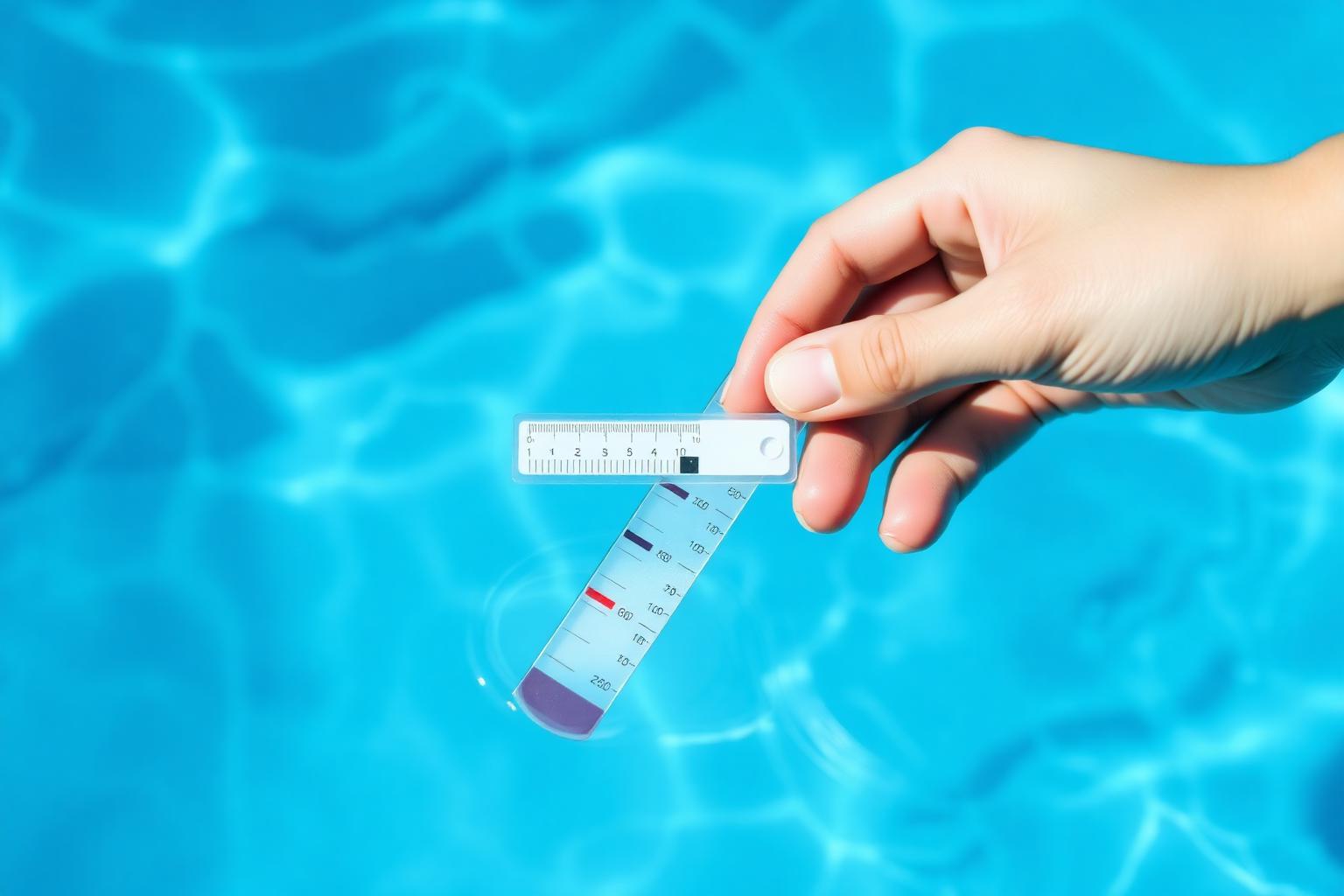
Before adding anything, test the water. Don't trust the number on your chlorinator's display. Cells lose calibration over time as scale builds up on the plates. The display can be off by 200-400 PPM after a year or two.
Two ways to test:
Salt test strips dip into the water for 10 seconds and give a color reading you compare to a chart. They give a range, not a precise number. Usually accurate within 200-400 PPM. Cheap. Fine for routine checks.
Digital salinity testers cost $30-80 and give a precise number. Better for actually setting up a calculator input.
If your strip and your chlorinator display disagree by a lot, the strip is probably right. Calibrate the chlorinator using whatever procedure your manual specifies. For Hayward AquaRite this is usually holding the diagnostic button until the cell readout matches your physical test.
If the display still won't match after calibration, the cell may need cleaning. White or grey scale buildup blocks the sensor and reads as low salt even when salt is fine. A 10-minute soak in dilute muriatic acid (one part acid to four parts water) usually clears it.
Target salt levels by brand
The article you've probably read says "most chlorinators target 3,200 PPM." This is partly right. The actual numbers, by manufacturer:
Hayward AquaRite and similar: 3,200 PPM target, with an operating range of 2,700-3,400.
Pentair IntelliChlor: 3,400 PPM target. Operating range 3,000-4,500.
Jandy AquaPure: 3,500 PPM target.
CircuPool, ChlorKing, and most newer aftermarket brands: 3,000-3,500 PPM targets.
Check your manual. The number printed on the lid of the cell housing is also usually correct.
Don't use a friend's number if their system is a different brand. The reason matters. Running too low forces the cell to work harder and shortens its life. Running too high doesn't damage anything until you cross 6,000 PPM. But most cells will throw a high-salt error around 4,500 and stop generating chlorine until you bring it down.
The actual calculation
The math is one line.
Pounds of salt = (Target PPM minus Current PPM) times pool gallons, all divided by 120,000.
A 15,000-gallon pool reading 2,400 PPM, targeting 3,200, needs 100 pounds of salt to close the gap. Salt is sold in 40-pound bags. So 100 pounds is two and a half bags.
Round down. Buy two bags. Add the third later if you need it after retesting in 24 hours.
Always round down. Adding salt takes five minutes. Removing salt requires draining and refilling part of the pool, which takes hours and wastes water.
What kind of salt to buy
Pool-grade sodium chloride. Look for "99.8% pure" or higher on the bag.
Don't use water softener pellets. They have anti-caking agents that can cloud the water and clog the cell.
Don't use rock salt or ice melt. Both contain trace iron and copper that will stain pool surfaces. Iron stains rusty brown. Copper stains green or blue. Both are hard to remove from plaster and impossible to remove from vinyl.
Don't use food-grade table salt. It's pure but has anti-caking agents (usually sodium silicoaluminate) that you don't want in your water.
The right product is usually labeled "pool salt" or "swimming pool salt" and runs $6-10 per 40-pound bag. Some brands market specifically for saltwater chlorinators. Those work fine but you're not getting anything different from a generic 99.8% sodium chloride bag.
Adding the salt
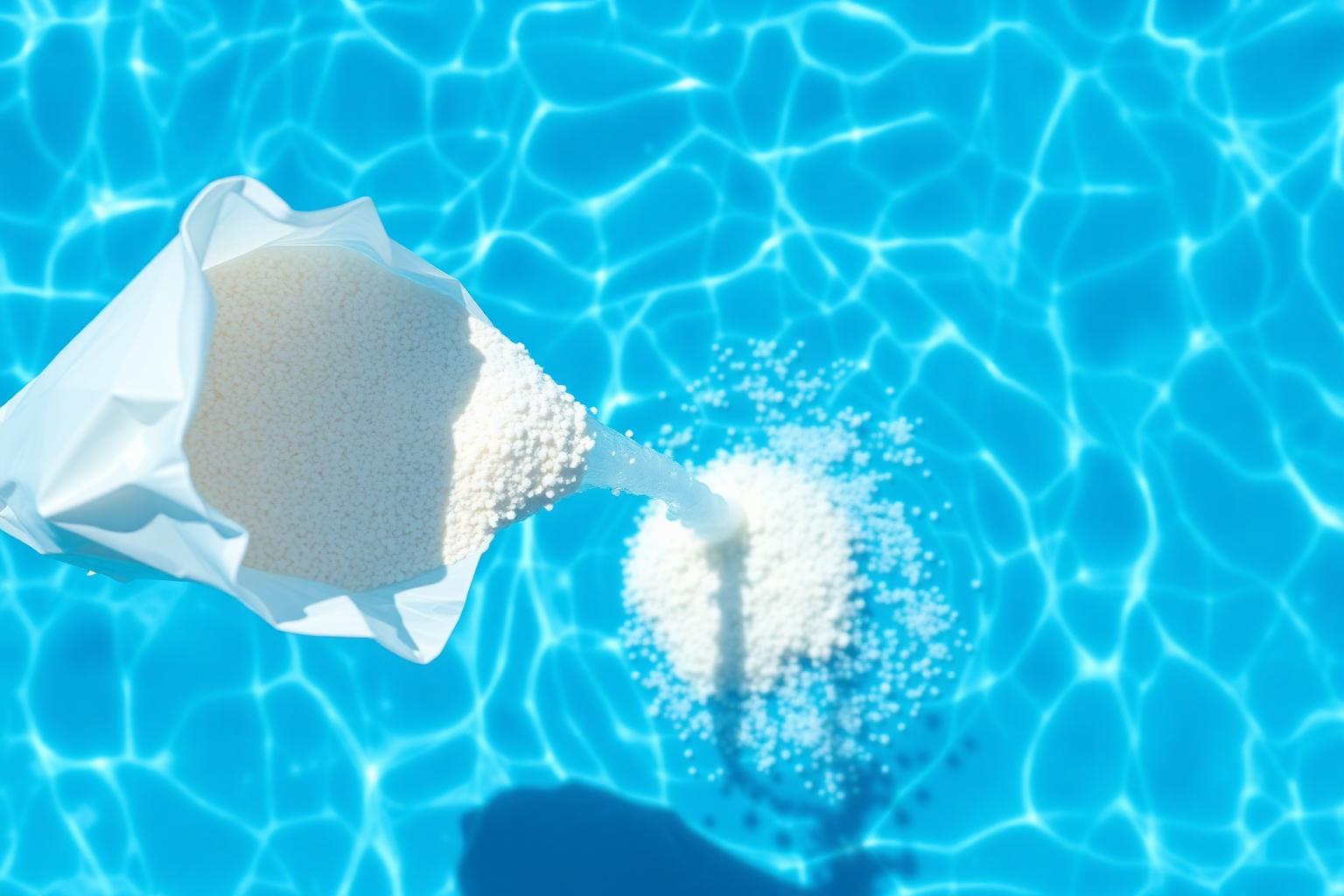
Pump on. Chlorinator off. Pour the salt slowly along the deep end perimeter, walking around the pool as you pour. Don't dump it in the skimmer. Granular salt rushed through your filter and pump can damage both.
After all bags are in, brush any piles on the bottom to disperse them. Run the pump continuously for 24 hours. Don't turn the chlorinator back on until the salt has fully dissolved and circulated, otherwise the cell sees an artificially high reading at the intake and may shut down.
Test again after 24 hours. If you're below target, add more. If you're above target by less than 200 PPM, leave it; it'll drift down naturally over a few weeks. If you're significantly over, see the next section.
Fixing too much salt
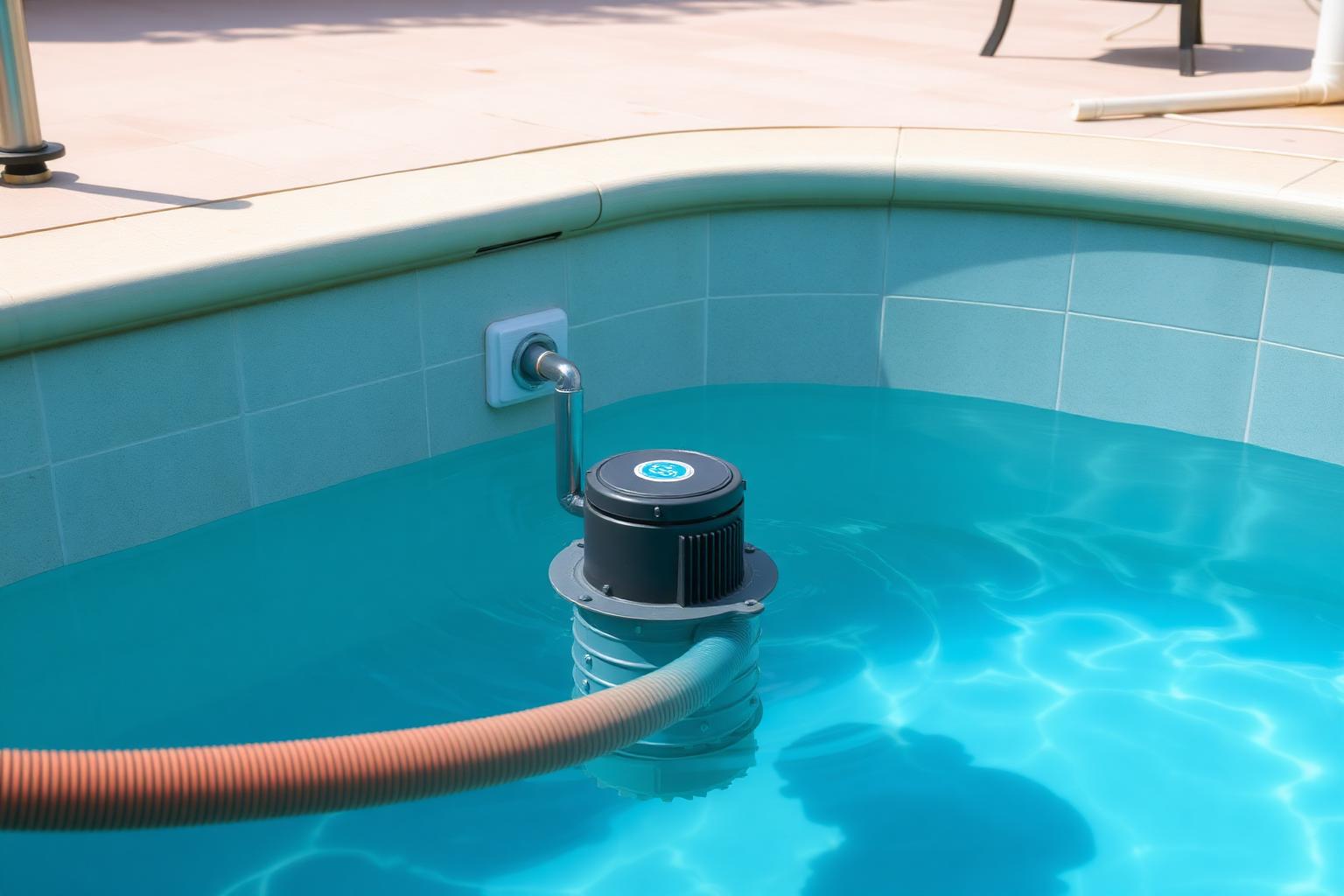
There's no chemical that removes salt. The only way to lower salinity is dilution. Drain part of the pool and refill with fresh water.
The math is just a percentage. Subtract the target from the current level. Divide by the current level. That's the fraction of pool water you need to swap out.
A pool at 4,500 PPM with a 3,200 target needs about 29% of its water replaced. For a 15,000-gallon pool that's about 4,300 gallons. Drain from the deep end with a submersible pump. Refill from the garden hose. Test again after the water has circulated. Adjust if needed.
This is annoying. Avoid it by adding less salt than you think you need and retesting before adding more.
Cyanuric acid and the other things calculators ignore
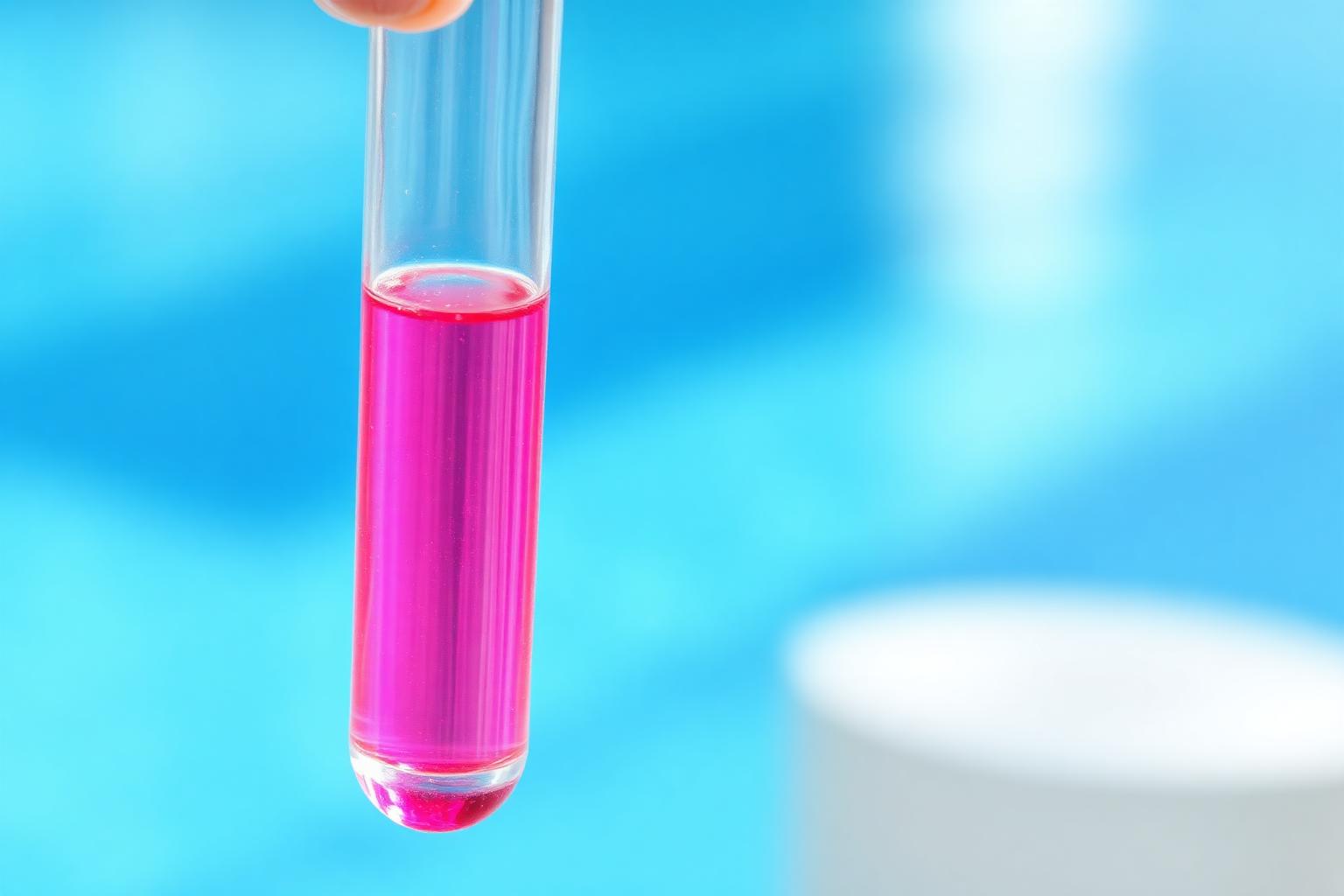
Salt is one thing on a longer list. The others matter just as much for cell life and water quality.
Cyanuric acid is the big one. Often called stabilizer or conditioner. It protects chlorine from UV breakdown. Without it, the chlorine your cell generates breaks down within hours of hitting sunlight. With it, the chlorine actually has time to sanitize. Target for saltwater pools is 60-80 PPM. Below 30 you're losing chlorine fast. Above 100 the chlorine becomes less effective at killing bacteria.
pH drifts up over time on saltwater pools. It's a side effect of how the cell generates chlorine. Target is 7.4 to 7.6. Above 7.8 you start getting scale on the cell.
Total alkalinity acts as a pH buffer. Target 80-120 PPM.
Calcium hardness needs watching too. Target 200-400 PPM. Too low and the water leaches calcium from plaster surfaces. Too high and you get scale on the cell.
Add salt while ignoring these other levels and the cell will scale up regardless. Plan to acid-wash the cell every six to twelve months. Some salt systems have a self-cleaning cycle that helps but doesn't replace manual cleaning.
Cost comparison
The "saltwater pays for itself" pitch is roughly true. The numbers vary more than the marketing admits.
Liquid chlorine for a 15,000-gallon pool runs $300 to $700 per swimming season. Depends on usage, climate, and whether you're also shocking with cal-hypo or dichlor. Average around $500.
A salt chlorinator system for the same pool costs $1,200 to $2,500 installed. Cell replacement every five to seven years adds another $400 to $800 depending on brand.
Annual salt cost is small. Maybe $50 to $100 to top off after rain dilution and splash-out. Negligible compared to liquid chlorine.
The break-even works out to about four years for most setups. Cell replacement at year five to seven resets the math somewhat. Long-term it still comes out ahead.
The reason to switch usually isn't money though. It's that the water feels softer, doesn't smell like chlorine, and doesn't bleach swimsuits as fast. The financial argument is real but secondary.
What online calculators get wrong
Most pool salt calculators handle the math correctly. The problems are around the edges.
They don't ask about chlorinator brand. So they default to 3,200 PPM regardless of whether you have a Pentair targeting 3,400 or a Jandy targeting 3,500. Off by 200 to 300 PPM, which is enough to keep your low-salt light on after you've followed the calculator's advice.
They don't ask about pool shape. Free-form and oval pool owners are putting in volume estimates 10 to 20% off. The error carries straight through to the salt calculation.
Test strips give a range, not a precise number. The calculator treats whatever you type as exact. If your strip reads "2,400 to 2,800 PPM" and you enter 2,400, your "100 pounds needed" might actually be 80. Or 120.
They don't tell you to retest before adding more. People add the calculated amount in one go and assume it's done. Adding in two stages with a retest in between is much more forgiving.
The calculator is useful for a rough number. The retest, the brand-specific target, and the conservative rounding are what get you to the right answer.
A short Saturday routine
Test the water with a strip. Note the salt PPM and the pH.
Glance at the chlorinator display. If it agrees with your strip within 200 PPM, fine. If not, plan to clean the cell next weekend.
Salt below target by more than 400 PPM? Calculate what you need and add half. Run the pump 24 hours. Retest. Add the rest if you're still low.
pH crept above 7.8? Add a small amount of muriatic acid or dry acid per the bottle's instructions for your pool size.
Once a week, fifteen minutes. The cell does the actual sanitizing for you.