

 Hannah Brooks
How to estimate pavers, base, and sand for a patio or walkway
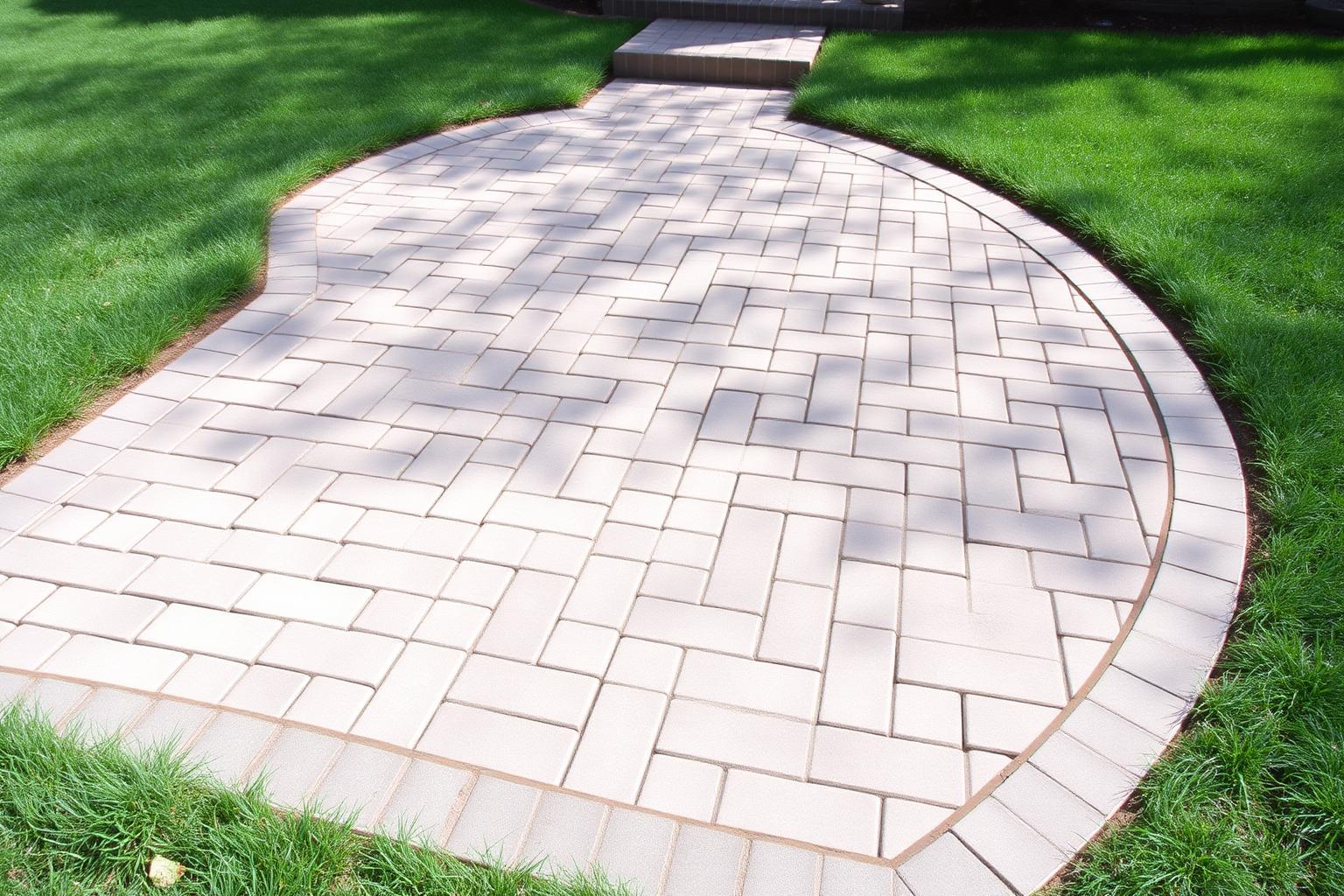
How to estimate pavers, base, and sand for a patio or walkway
Most paver projects fail at the supply yard. Not on the install. You order too few pavers and run short halfway through laying the field. Or you order too much base and have a cubic yard of crushed stone on your lawn for six months. Neither is the end of the world. Both are annoying. Thirty minutes with a calculator before you order saves you the problem.
A paver calculator doesn't do anything you couldn't do with a tape measure. It just removes the steps where people make mistakes. Converting between inches and feet. Per-paver coverage. Cubic feet to cubic yards. That kind of thing.
What follows is the actual math. The inputs that matter. The parts the online calculators handle badly.
The three things you're actually estimating
A paver project has three quantities to calculate. They're independent.
The pavers themselves. Calculated by area and unit size.
The base. Usually compacted crushed stone, like 3/4-inch minus or road base. Calculated by area and depth. This is what gives the patio its support and frost resistance.
The sand. Usually two layers. A 1-inch bedding layer the pavers sit on. And joint sand that fills the gaps between them.
Each of these is a different math problem. Most of the calculators online handle pavers fine, do a rough job on base, and skip joint sand entirely or get it noticeably wrong.
Measuring the project area
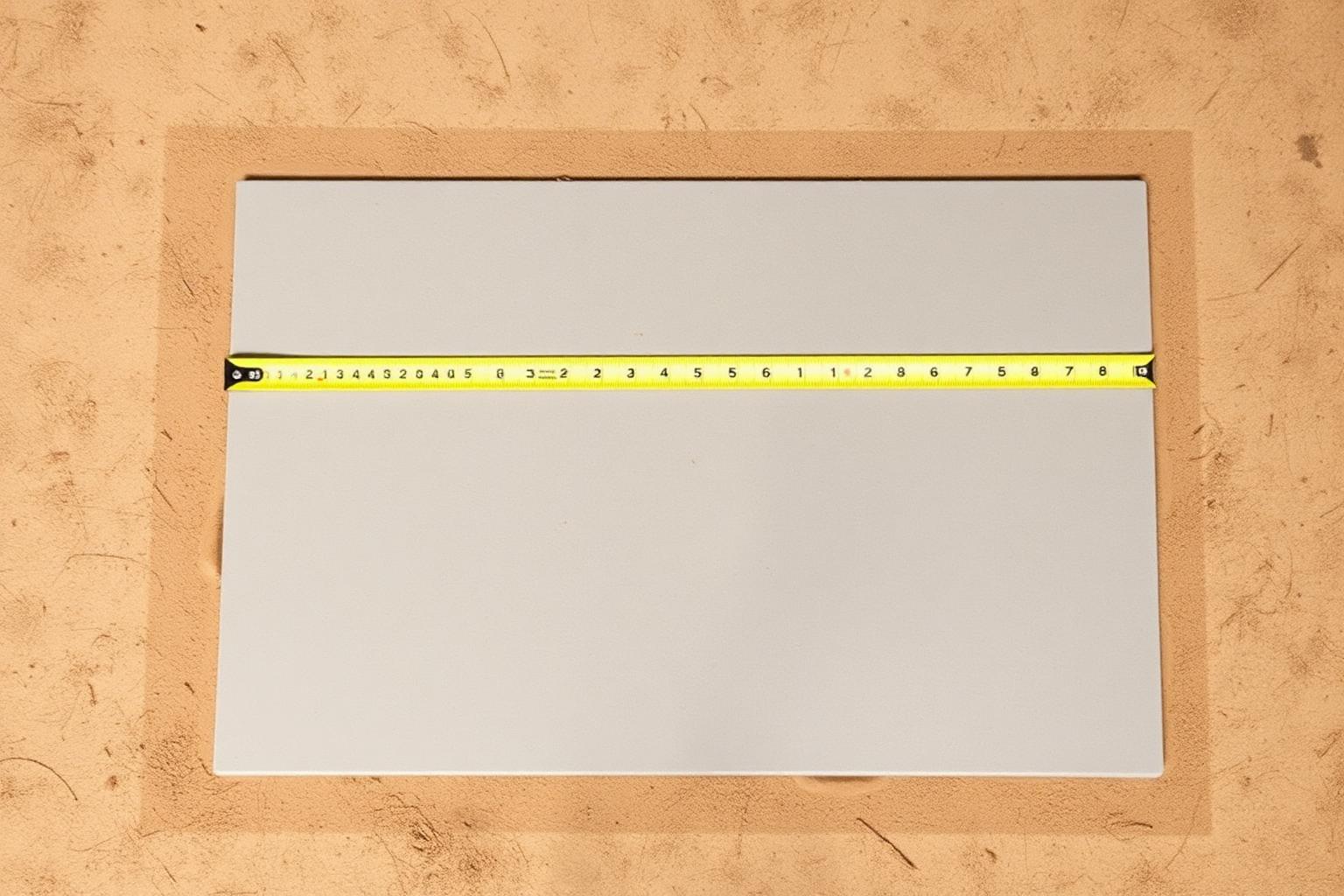
For a rectangular patio, you measure length times width and that's your area. A 12x16 patio is 192 square feet. Done.
For anything more complicated than a rectangle, the trick is to break the project into rectangles you can measure separately and add up. An L-shaped patio is two rectangles. A patio with a rounded edge is a rectangle plus a half-circle (area of a half-circle is π × r² ÷ 2, where r is the radius).
If you've got a curved walkway, the easiest approach is to measure along the centerline rather than at the edges, then multiply by the average width. A 30-foot curved path averaging 4 feet wide is 120 square feet for ordering purposes. You'll cut more pavers than you would on a straight path, which goes into the waste factor — more on that below.
The mistake people make is measuring the planned project rather than the existing space. If your patio is going against an existing wall, measure to the wall, not to where you imagine the patio ending. Real walls are rarely as straight as you think.
Pavers per square foot
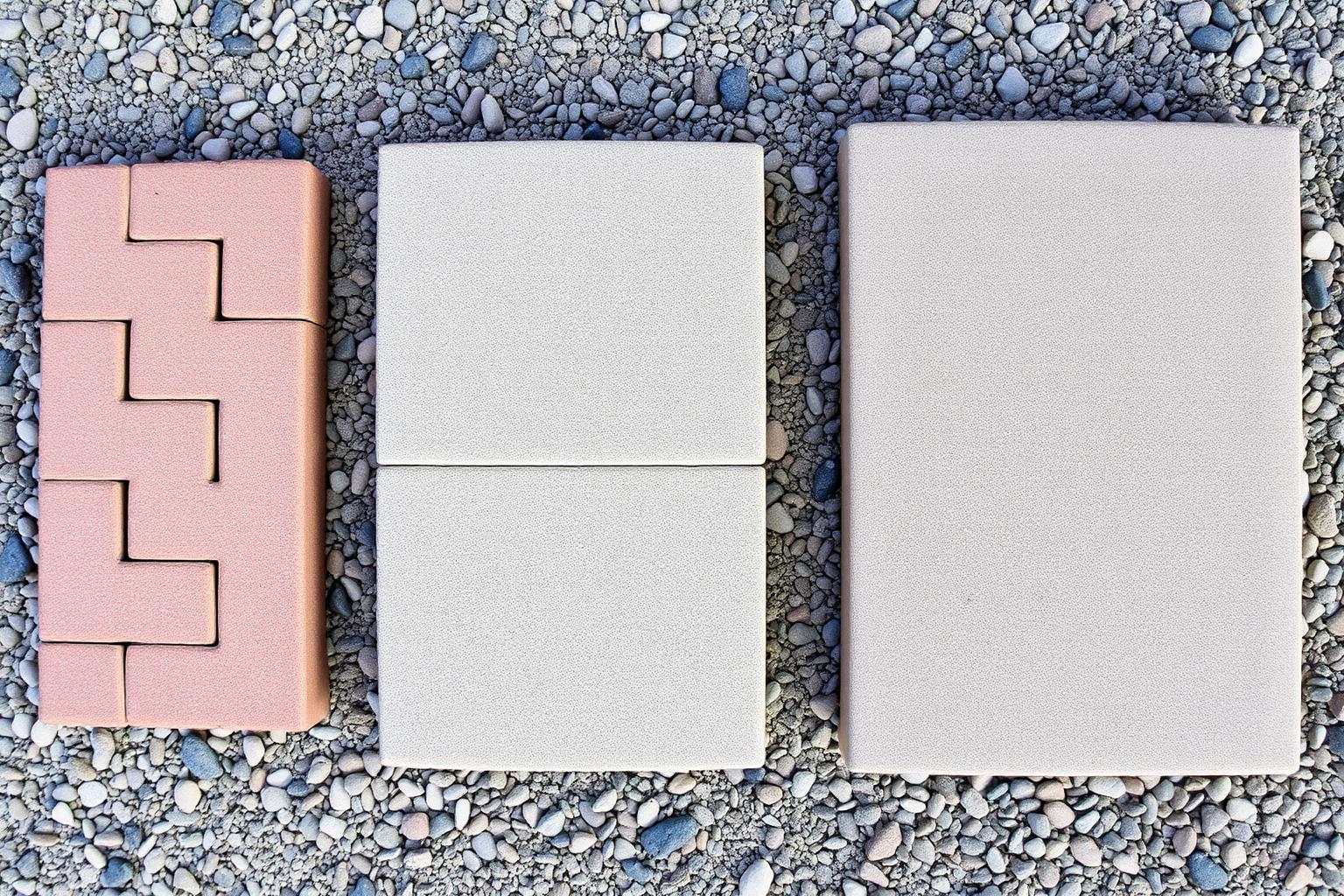
This is where the calculator earns its keep, but the math is simple if you want to do it yourself. The number of pavers per square foot is 144 (square inches per square foot) divided by the area of one paver in square inches.
Some common paver sizes:
A 4x8 brick-style paver is 32 square inches, so 144 ÷ 32 = 4.5 pavers per square foot. That's the standard for most herringbone and running-bond patios.
A 6x9 paver is 54 square inches, so about 2.67 per square foot. Common for larger-format patios.
A 12x12 square paver is 144 square inches, so exactly 1 per square foot. These are usually the simplest to plan but show every imperfection in your base.
A 6x6 square is 36 square inches, so 4 per square foot.
For a 192 square foot patio with 4x8 pavers: 192 × 4.5 = 864 pavers before any waste factor.
Mixed-size patterns are different. The "European" or "Roman" sets with three or four sizes per package. Those are sold by the square foot of coverage. The manufacturer tells you how much area each pallet covers. So you don't have to do per-paver math. Just match coverage to your project area.
Waste factor
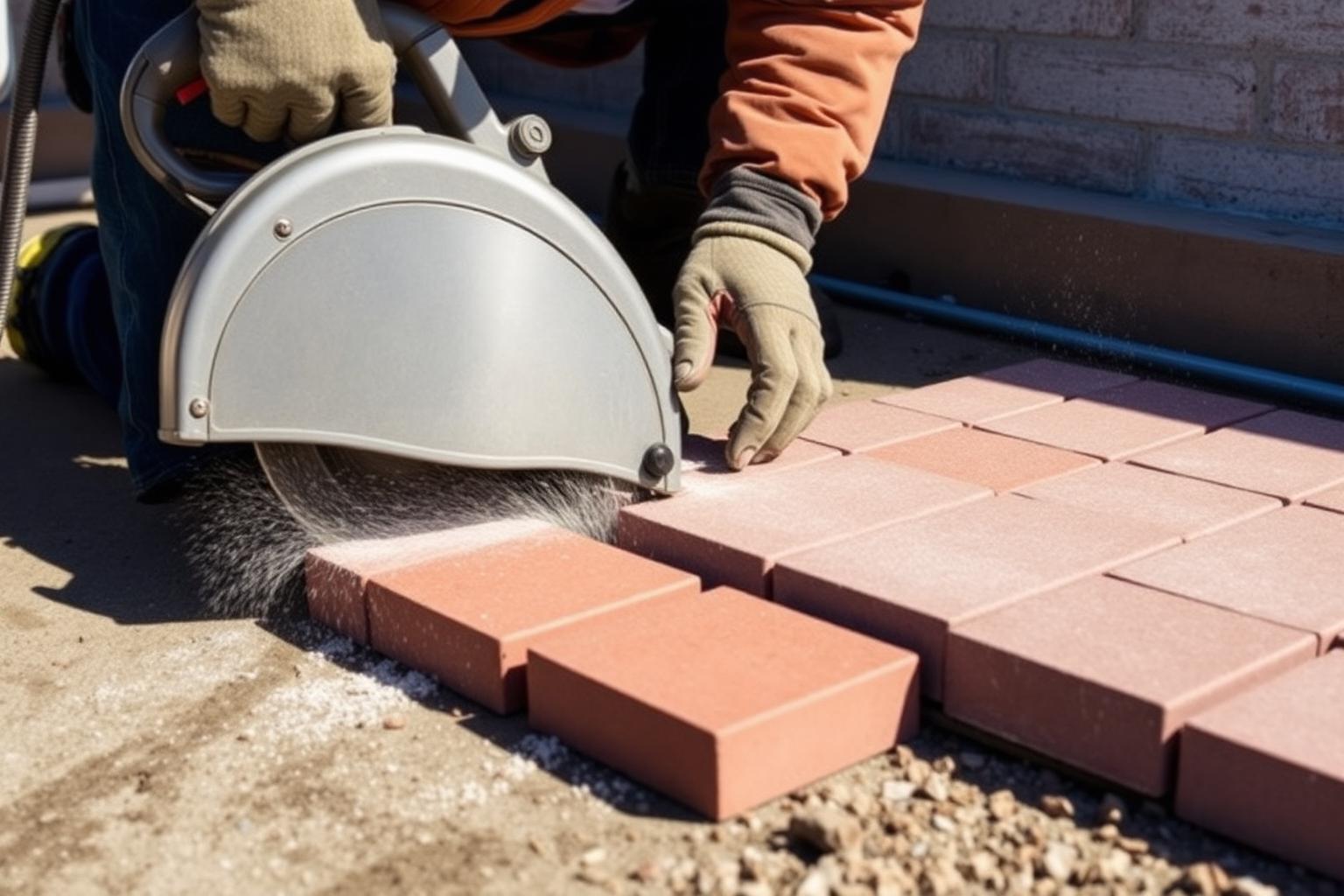
Pavers break. You'll cut them. You'll drop one. And at the end you want a few extras stashed in the garage. For when one cracks two years from now.
Standard waste on a rectangular patio: 5%. So 864 pavers becomes 907. Round up to the pallet size. Most pallets hold 100 to 300 pavers depending on the unit.
Complicated layouts need more. Herringbone at 45 degrees to the patio edges? Figure 10%. Every perimeter paver gets cut. A circular fire pit can hit 15%. Curved walkways too.
Base material
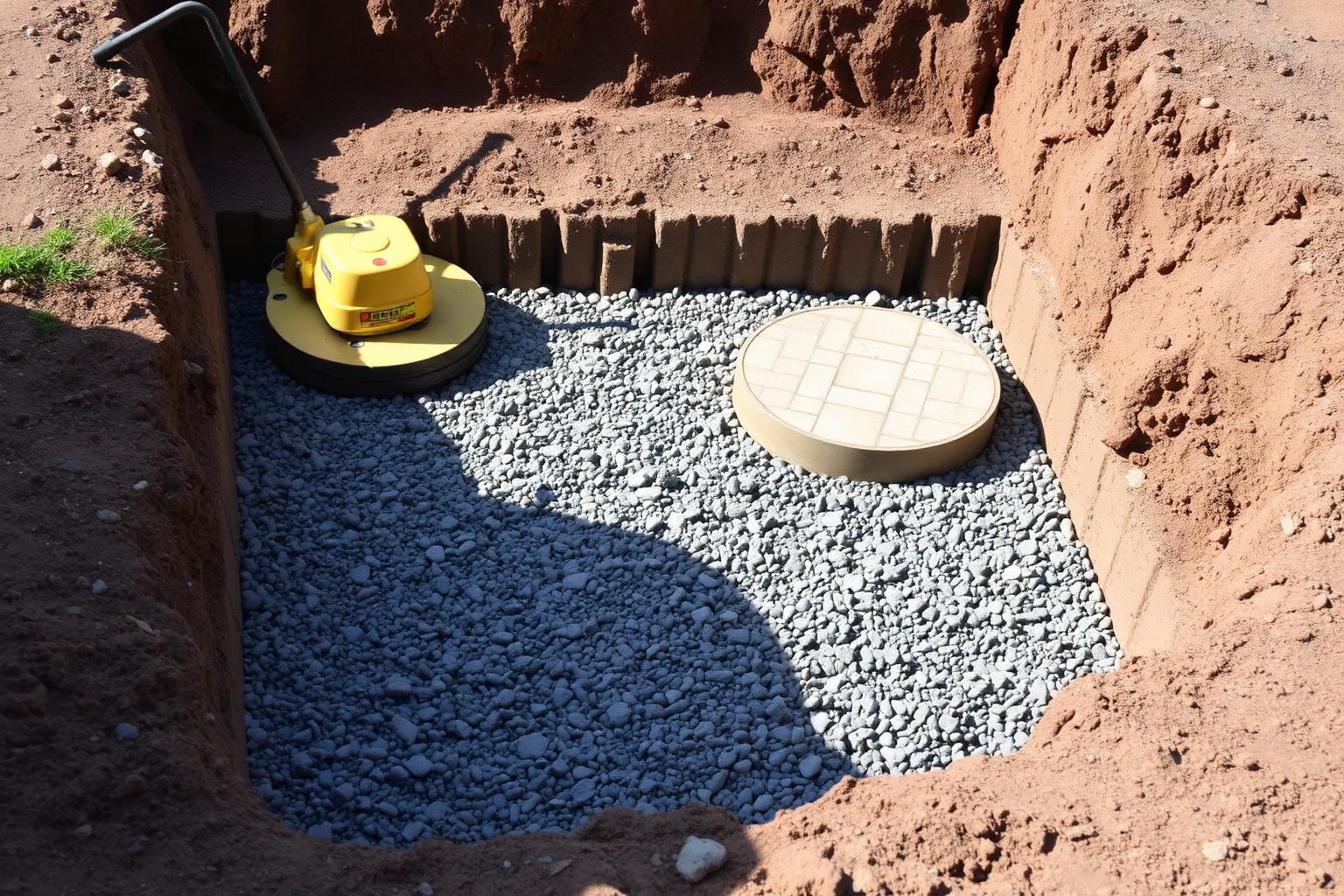
This is where new DIYers consistently underestimate. Both depth and volume.
Foot-traffic patio in stable, well-drained soil: 4 inches of compacted base. Clay-heavy or poorly draining soil: 6 inches.
Driveway, or anywhere a vehicle parks: 8 inches minimum. Ideally 10 to 12. The "4-6 inches" you see online is wrong for vehicle loads. A car parked on 4 inches of base will push the pavers down through it. Especially with freeze-thaw.
Walkways: 4 inches is usually fine.
The math: project area × base depth in feet = cubic feet. Divide by 27 for cubic yards. That's how base material is sold.
For 192 sq ft at 4 inches deep: 192 × (4/12) = 64 cubic feet. 64 ÷ 27 = 2.37 cubic yards. Round up to 2.5.
The wrinkle: crushed stone compacts. Your 2.5 cubic yards will compact to about 2 yards in place. So the order is right for a 4-inch finished base. The math assumes loose volume.
If you don't compact it, the patio will settle. You should compact in 2-inch lifts. With a plate compactor. You'll know within the first winter if you skipped this.
Bedding sand
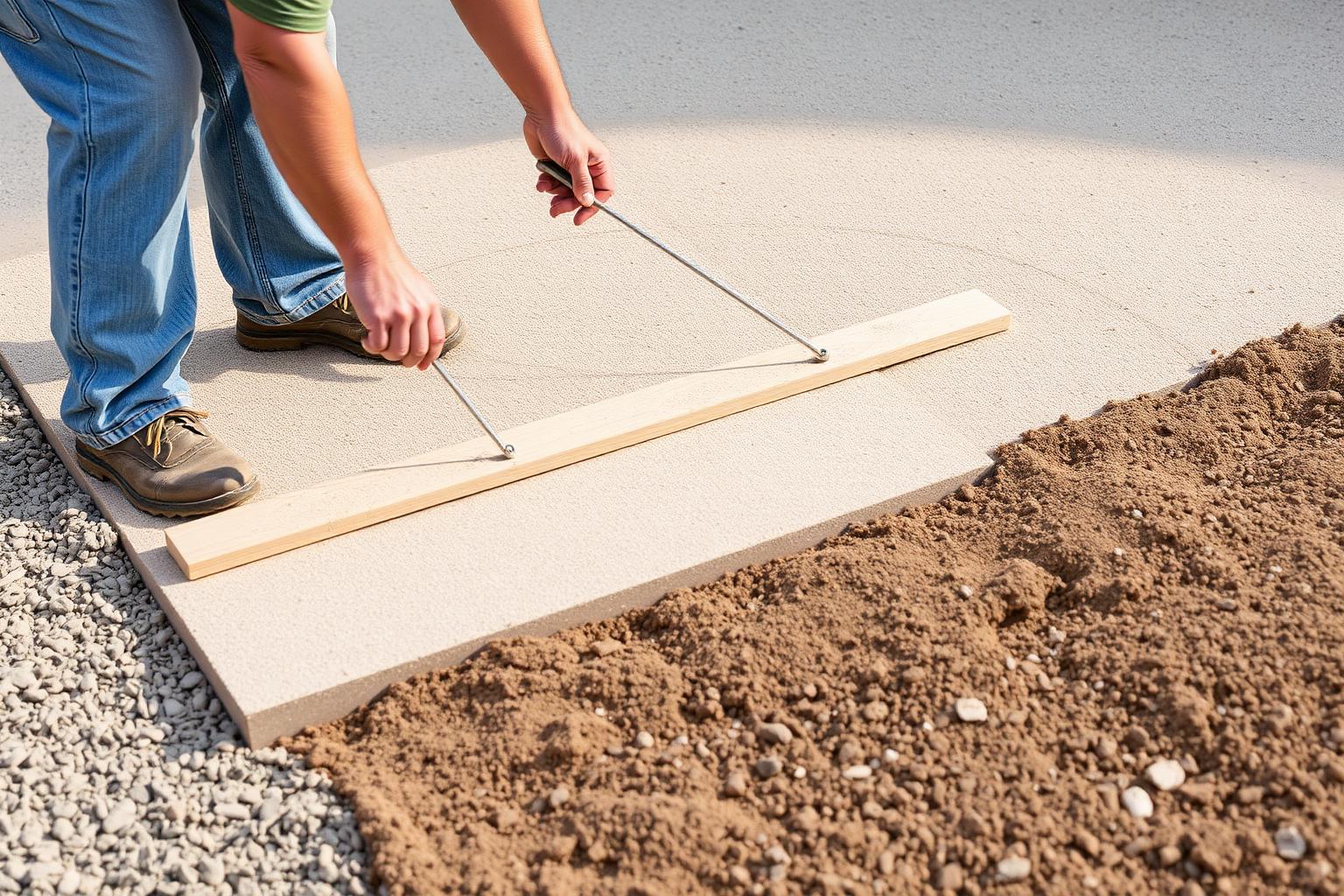
Sharp sand or coarse masonry sand. Exactly 1 inch deep. Screeded flat across the compacted base. Pavers sit on this. Not on the base directly.
Volume math: project area × 1/12 = cubic feet. Then divide by 27. For 192 sq ft: 192 × 1/12 = 16 cubic feet. That's 0.59 cubic yards. Round up to 0.75.
Sand sells two ways. By the yard in bulk. Or by 50-pound bags. A 50-pound bag covers 5 to 6 sq ft at 1 inch. So 192 sq ft is around 35 bags. Bulk is much cheaper at that volume. But only if you can move it from the delivery pile to where it goes. A wheelbarrow and a strong friend, basically.
Don't substitute play sand. Or fine masonry sand. Play sand is too fine and too rounded. Pavers shift over it. The right material is "concrete sand" or ASTM C-33. Angular particles. They lock under compaction.
Joint sand
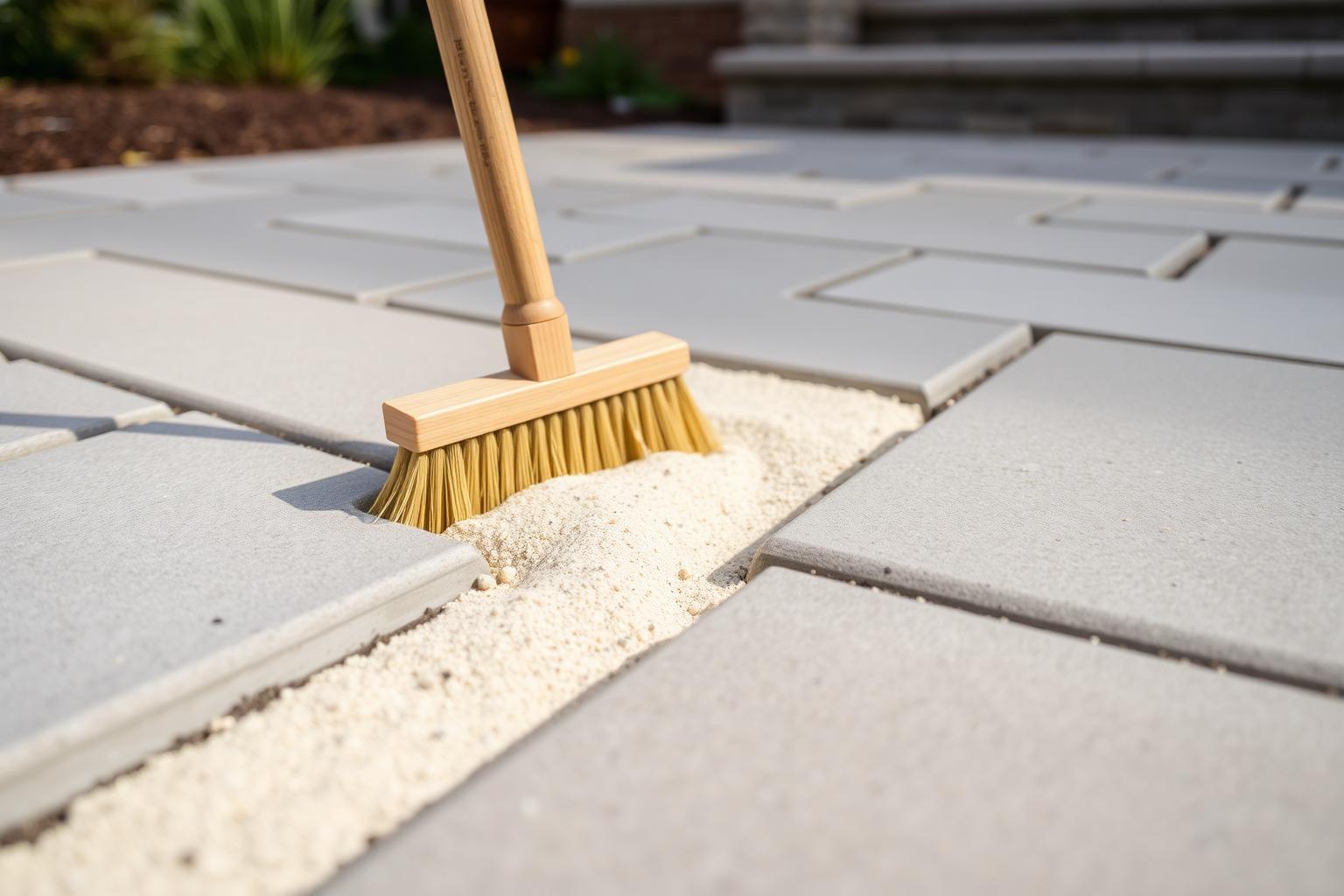
Joint sand fills the gaps between pavers after they're laid. Most modern installs use polymeric sand. Regular jointing sand with a polymer binder mixed in. Wet it and the polymer activates. Locks the sand in place. Keeps weeds out. Stops the joints washing out in heavy rain.
A 50-pound bag of polymeric sand covers 75 to 100 sq ft at 1/8-inch joints. Drops to maybe 50 sq ft at 1/4-inch joints. Joint width depends on the paver. Most have spacer nibs that produce 1/8-inch joints. Tumbled or weathered pavers have wider joints. The irregular edges.
For 192 sq ft with 1/8-inch joints: 2 to 3 bags. Read the bag for coverage rate.
The most common mistake with polymeric sand is wetting it wrong. Too dry and the polymer doesn't activate. Too wet and the binder washes out. You end up with regular sand that has lumps. Follow the instructions exactly. Including the part about sweeping clean before activating. Dried polymer haze on paver faces is hard to remove later.
Putting it all together
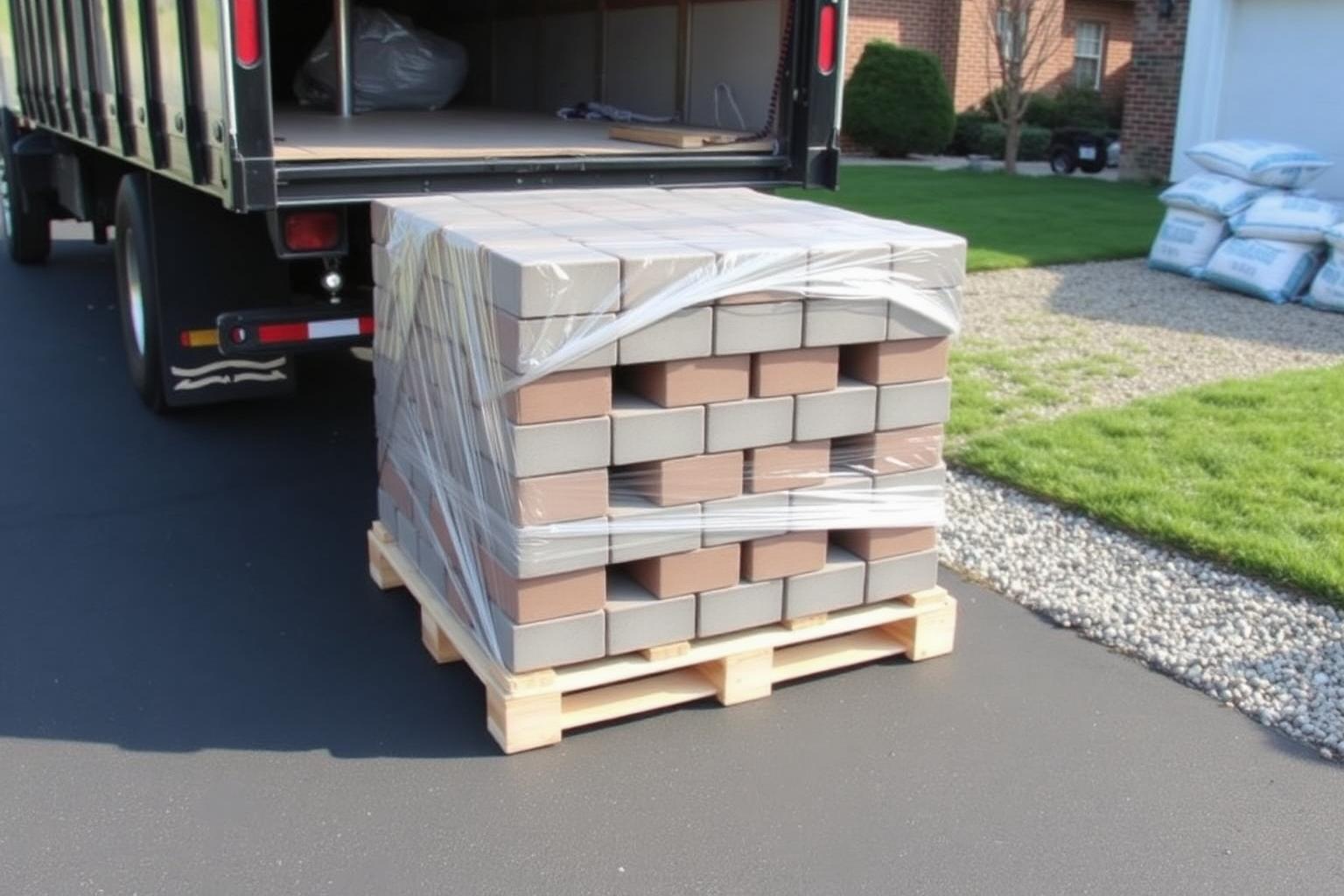
For a 192 sq ft patio. 4x8 pavers. 4-inch base. 1-inch bedding. 1/8-inch joints:
About 907 pavers. That's 864 calculated plus 5% waste. Round up to the pallet quantity.
Roughly 2.5 cubic yards of base.
About 0.75 cubic yards of bedding sand.
2 to 3 bags of polymeric jointing sand.
That's a procurement list. Not a project plan. The actual project also involves excavation. You dig down at least 5 inches below your finished elevation. To fit the base, sand, and pavers. You'll need a plate compactor. Probably rented. Edge restraints to keep the pavers from spreading. And a couple of long days of physical work. The math is the easy part.
What the online calculators get wrong
Most paver calculators are fine on paver count. And meaningfully wrong on everything else.
They default to a 4-inch base regardless of project. Fine for patios. Dangerously light for driveways.
They skip joint sand entirely. Or treat all joint widths as the same. So polymeric sand counts come out wrong.
They almost never adjust for compaction loss. Sometimes the math accidentally works because loose volume happens to match in-place need. Sometimes it leaves you 15% short.
They don't ask about soil type. Which actually changes the recommended depth.
So the calculator is useful for paver count. For everything else, knowing the math yourself is better than trusting the defaults. A 5% miss on pavers is an extra trip to the supply yard. A 30% miss on base is stopping mid-installation while a delivery truck goes back for more.
Common mistakes that wreck the math
Forgetting that pavers aren't their nominal size. A "4x8" paver is usually 3 7/8 by 7 7/8. Same way a "16-inch" concrete block is 15 5/8. The calculator handles this. The per-square-foot count includes joints. But if you start measuring layouts paver-by-paver against a tape measure, the discrepancy will catch you.
Underestimating cuts on herringbone or circular layouts. Herringbone at 45 degrees to a rectangular patio means every perimeter paver gets cut. On a 12x16 patio that's about 50 perimeter pavers. Each generates a cut piece that's usually unusable. The 5% waste isn't enough. Figure 10%.
Confusing tons with cubic yards when ordering base. Different units. Most yards sell base by the cubic yard. Some sell by the ton. A ton of crushed stone is roughly 2/3 of a cubic yard. Depends on density. Confirm units on the order.
Buying play sand for bedding. Don't.
On the personal side
A few years ago I built a 200 sq ft patio in my backyard. And got the base depth wrong. Too aggressive with the calculator. The site had moderately heavy clay. The recommendation should have been 6 inches. I used 4. Because that's what the online tool defaulted to.
The first winter, two corners settled. About half an inch. Not the end of the world. Pavers are repairable. You lift them, add base, recompact, reset. But it was an extra weekend of work I shouldn't have needed. And a clear lesson that calculator defaults are designed for the easy case. Not your case.
Now I always overshoot base depth. I'd rather have an extra cubic foot of stone in the truck bed. Than spend a weekend re-leveling pavers that have already shifted.
The other thing, having done this a few times. The math is the easy part. The hard part is excavation and compaction. The patio is only as flat and stable as the base under it. People spend hours picking the paver pattern. Twenty minutes thinking about the base. The actual ratio of importance is the inverse.